本帖最后由 Nora老师 于 2026-1-9 09:19 编辑
P6 Classes Now Open | Kangaroo Study 2026 Semester 1 Enrollment Guide
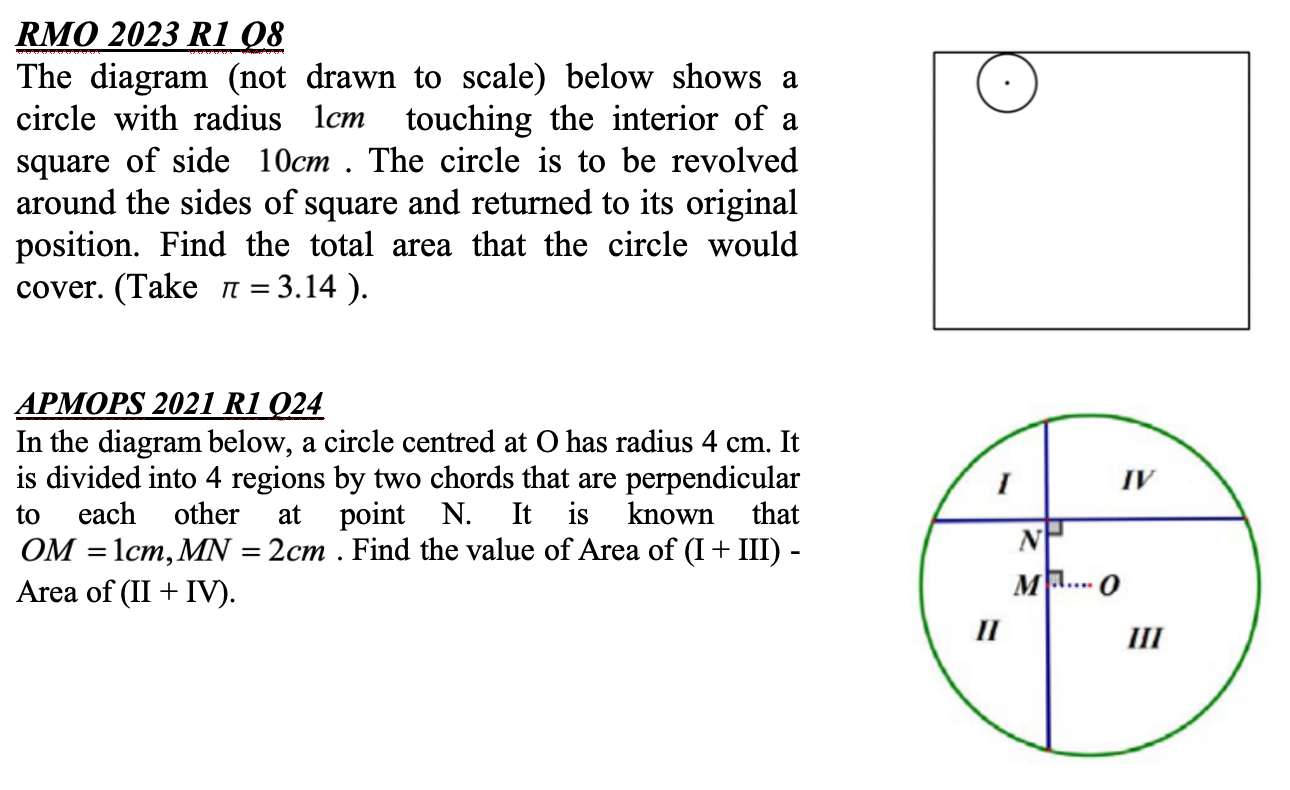
Two of the most challenging primary school mathematics competitions - RMO and APMOPS - will take place this April. Compared to NMOS, these contests cover a broader scope with greater complexity and higher difficulty levels. To achieve outstanding results, students must utilize this holiday period and the remaining six months to: Fill up gaps in knowledge points, conduct systematic revision, as well as start practice on integrated questions with multiple modules tested. This comprehensive preparation is essential for boosting competitiveness in these prestigious competitions. 1. Challenges in RMO and APMOPS and important preparation content (1)Broader knowledge points RMO and APMOPS both require a significantly broader and deeper knowledge base compared to NMOS, covering all primary school Olympiad math topics plus additional advanced concepts and specialized problem types. For instance, in geometry, students must master everything from basic circle and sector area calculations to complex skills like solving problems involving composite shape manipulation, rolling movements, rotational geometry, and path tracing. To succeed, students need to be able to master the content, and also having the ability to flexibly apply knowledge points learnt, and specialized techniques for unconventional problems. This expanded knowledge framework is essential for tackling the competitions' diverse and challenging questions that go well beyond standard NMOS requirements. (2)Increased Difficulty Both RMO and APMOPS cover all the topics tested in NMOS, but with significantly increased difficulty and complexity for the same concepts. Here are two examples to illustrate this difference:
The same topic of fraction decomposition appears in both NMOS and RMO, but in RMO: Students must first construct or manipulate numbers/expressions to reveal the pattern, they are required to find creative ways to reform numbers and formula application. This demonstrates how RMO takes fundamental concepts and elevates them through layers of mathematical reasoning and creative problem-solving.
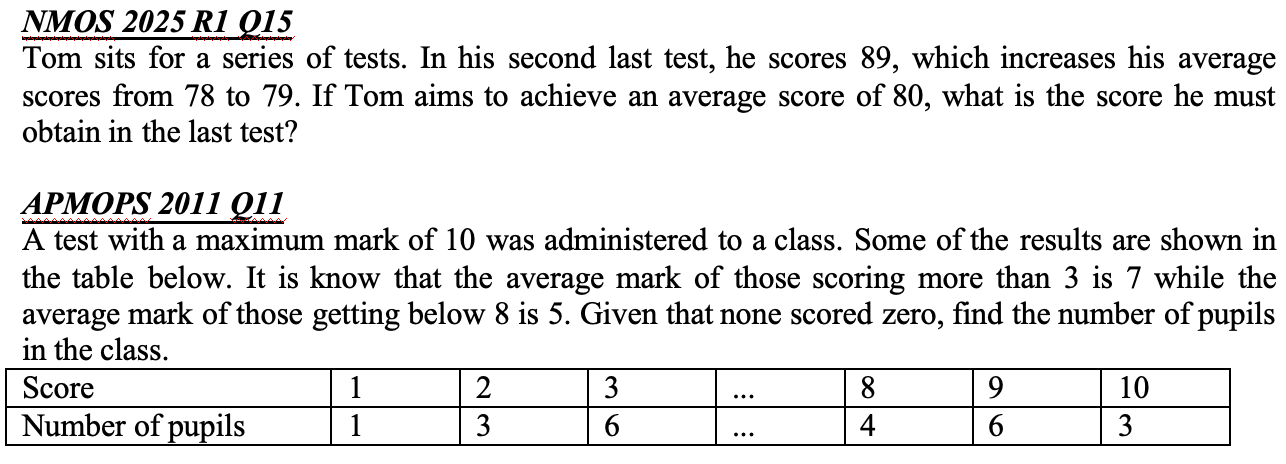
These two problems test the "transfer and balance" concept learned in Primary 2/3 about averages. While NMOS problems can be solved with a single diagram and step, APMOPS questions feature multiple average values requiring dual-layer transfer-balance analysis - a challenge only a handful of students can solve independently. This demonstrates that students cannot simply rely on prior knowledge. They must master new advanced concepts, deepen understanding of previously learned material and improvise on their proficiency to RMO/APMOPS standards Only through this comprehensive approach can students properly prepare for these demanding competitions. The key lies in transforming basic conceptual understanding into sophisticated problem-solving ability capable of handling multi-layered mathematical challenges. (3)Complex integrated questions RMO and APMOPS problems are more complex than NMOS. While NMOS usually tests one concept per question, RMO and APMOPS often combine multiple concepts into a single challenging problem. So, students need to not only master each concept but also learn to analyze complex problems and flexibly integrate multiple concepts to solve problems based on the question's characteristics.
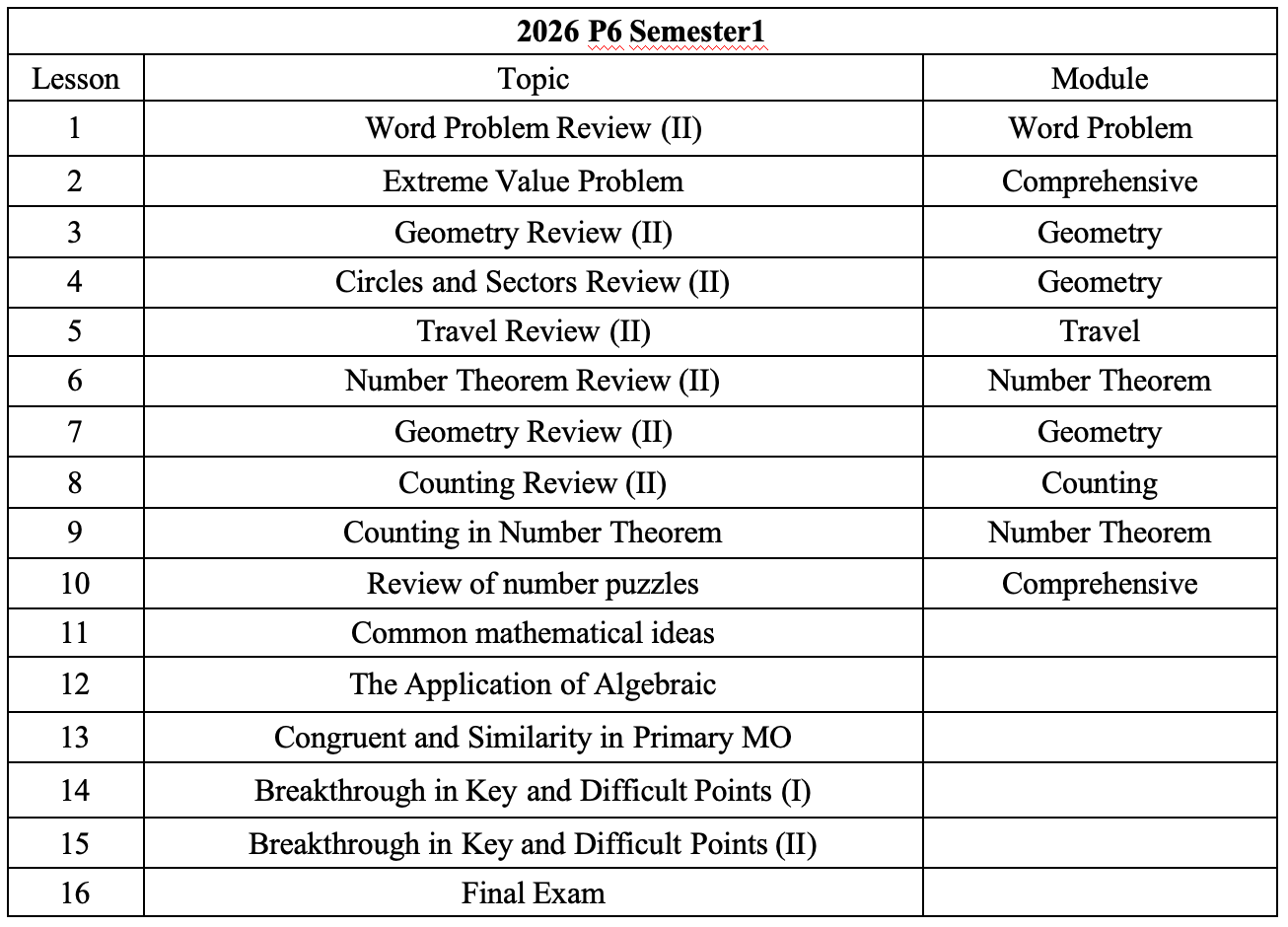
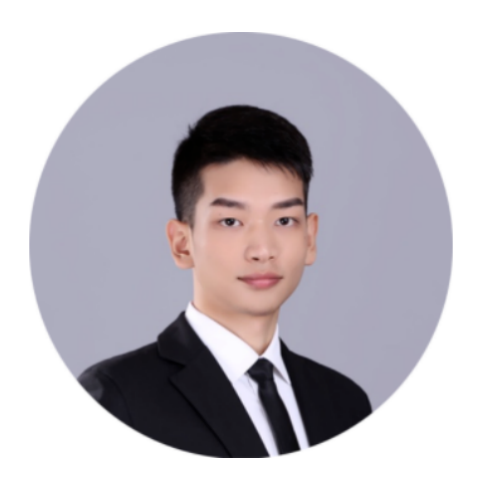
2. Our curriculum After analyzing high-frequency topics from RMO and APMOPS over the past decade and aligning them with current learning objectives, we have planned the following study content: After completing the final new concepts in 2025 Semester 2, the remaining curriculum will conduct comprehensive module-by-module reviews with these features: (1)Topic by topic revision The review starting from the year-end holiday will follow the 7 major modules of the Olympiad system: calculation, counting, number theory, word problems, mixed problems, and travel problems. Each module will be reviewed by systematically covering all knowledge points involved in RMO and APMOPS. Our learning scope will fully encompass the content assessed in RMO and APMOPS. All past exam questions from RMO and APMOPS can be matched with what we'll be studying. (2)Reinforcement with past year questions For each module, we will select several classic exam questions from previous years that correspond to the topic. Studying with actual exam problems helps students better understand question patterns and familiarize themselves with RMO and APMOPS' problem-setting styles. Additionally, Kangaroo.Study's teachers will also create new extension questions based on past exam problems. Going beyond just past papers ensures more comprehensive mastery of concepts, preparing students for these competitions' flexible and varied question styles. (3)Active learning The challenging problems in RMO and APMOPS primarily test students' grasp of mathematical thinking methods. Common approaches include: reverse thinking for difficult problems, extreme case analysis, and starting from simple cases. These thinking methods aren't tested as standalone question types, but rather integrated with various knowledge modules. Therefore, our teaching materials specifically select such problems. During instruction, we analyze the characteristics of these questions and the principles behind their solving methods. We've also designed dedicated lesson units - like optimization problems - to systematically develop these thinking skills. This two-pronged approach, covering both knowledge and thinking methodology, thoroughly prepares students for RMO and APMOPS. 3. Our Teachers Tr. Boqian(Lesson in English) Teacher Zhang graduated from National University of Singapore (NUS) and has over 6 years of local math teaching experience. He is well-versed in the local curriculum and major competitions such as NMOS and RMO. His achievements include gold medal in the Hua Luogeng Cup and perfect score in AMC8, Top 1% in AMC10/12, and invited to AIME. He has successfully guided multiple students to gold medals in top math competitions. Known for his clear explanations and dedicated teaching, he is highly trusted by both students and parents. Tr. Gao Xuming(Lesson in Chinese) Graduated from Wuhan University. Familiar with the Olympiad mathematics system and major competition proposition rules. In 2023, among the first batch of students in Singapore, 10 students from S1 successfully entered the SMO Junior group's R2 (a total of 106 students from S1&S2 in total). At the same time, some students successfully joined the Junior Training Team. In 2024, 13 students from the non-exploration class entered the SMO Junior group second round, 6 won gold medals, and 3 entered the Junior Training Team. In 2025, 13 students from non-exploration classes entered the SMO Junior R2, and 4 students entered the Junior Training Team. 9 elementary school students won RMO HD, 4 students won APMOPS Platinum, and 80% of P5 students won NMOS Gold.
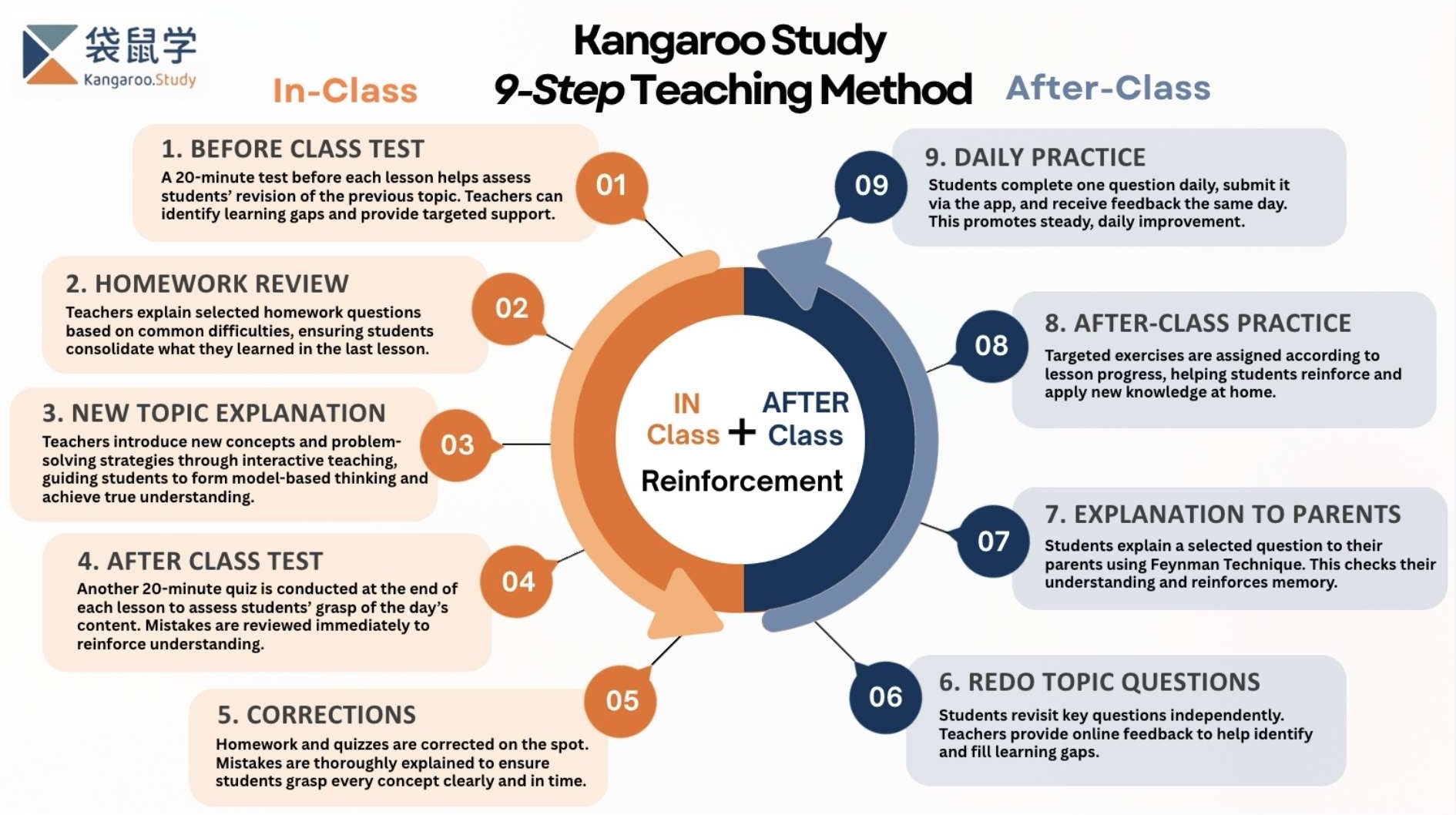
4. Teaching Model Three Key Features Parent Observation – One parent may sit in during class to observe without disrupting lessons. Refund Anytime – Tuition is refundable on a pro-rated basis. Dual-Teacher Classroom – One main teacher delivers lessons while an assistant provides real-time student feedback. Teaching Principles Guidance over Spoon-Feeding – We never directly give solutions or force memorization. No Leaving Without Understanding – Students must correct all errors from pre-tests, homework, class examples, and post-tests before leaving. Cultivating Achievement – We encourage rather than criticize, fostering confidence and motivation. Nine-Step Teaching Cycle From example explanation to post-class review, ensuring mastery and strong study habits.
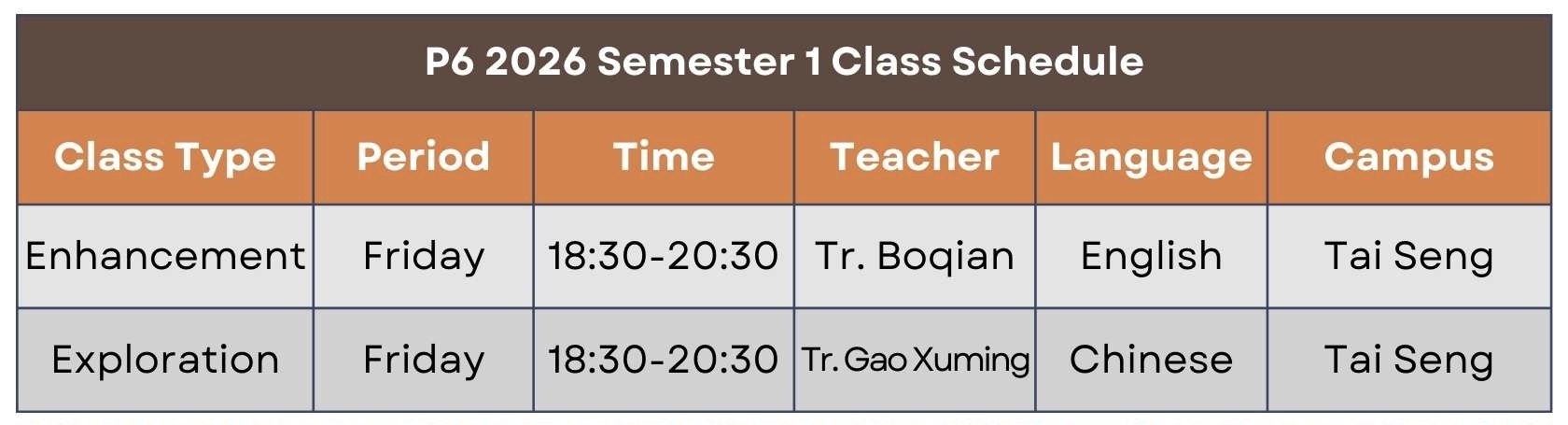
5. Course Schedule (1)2026 Semester 1 Class Time:Starting from 9th January 2026 (Once weekly) (2)Class Mode:Offline Class
(3)Class Location:Tai Seng: #02-12, Grantral Mall, 601 MacPherson Road, 368242 (4)Class Size:Max16 students
(5)Fees:S$120 per lesson, 16 lessons in Semester 1,S$120 × 16 = S$1920
6. Enrollment Notes Students must first take a diagnostic test to determine the appropriate class level. For booking and inquiries, contact Teacher Gao via WeChat/WhatsApp. Through diagnostic testing, we will analyze each child's current learning status and provide tailored study recommendations. Children will also attend teacher-led test review sessions to experience our actual classroom teaching. For more details about our courses, please contact Teacher Gao at any time.
| 


 发表于 2026-1-8 10:17:46