本帖最后由 Nora老师 于 2026-3-6 10:46 编辑
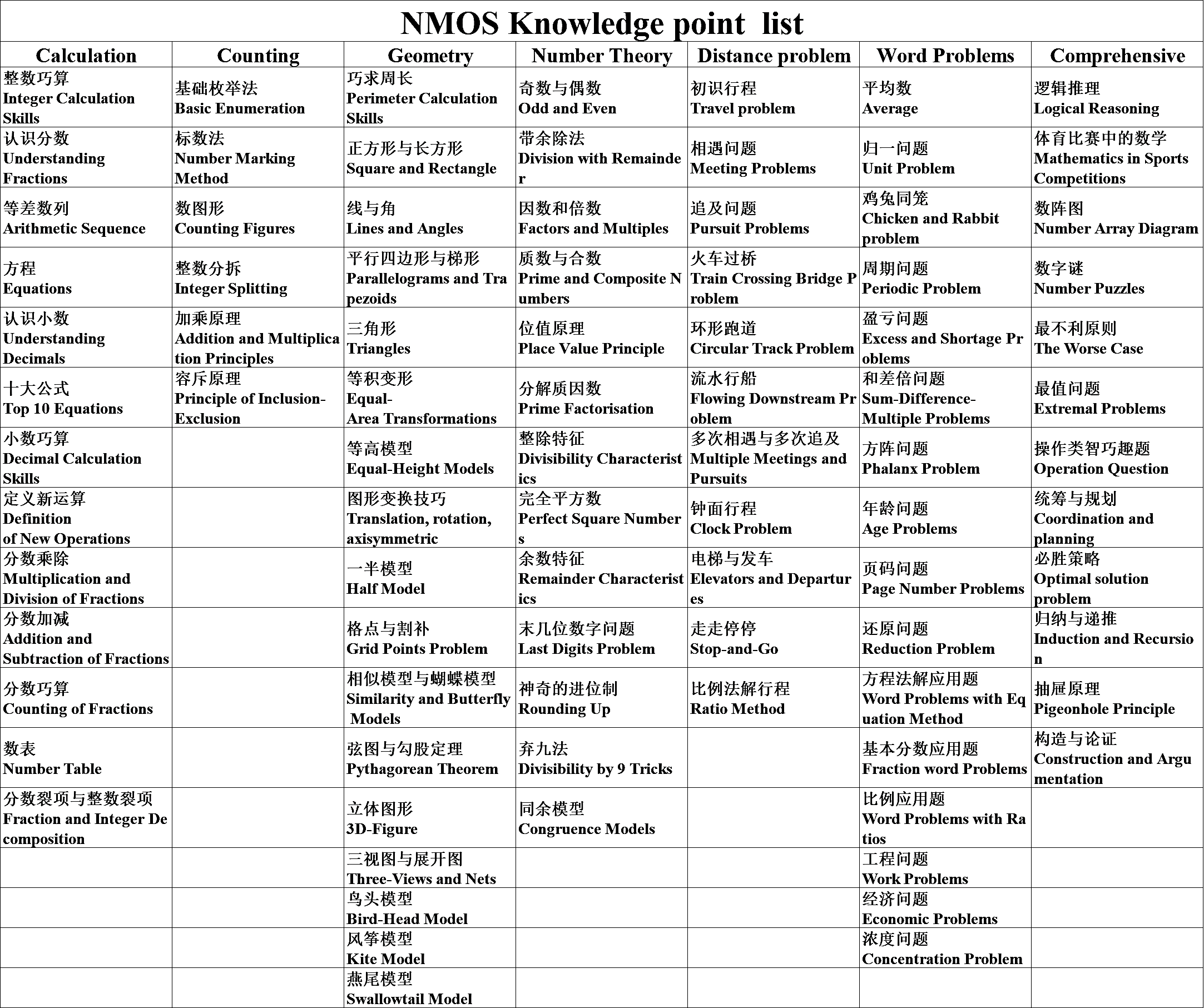
Kangaroo Study P4 June Holiday & Semester2 Enrolment Guide 1. Why P4 Is a Critical Year for Olympiad Preparation) NMOS Restructuring: Early Preparation for the Following Year NMOS is one of Singapore’s three major math Olympiad competitions. Its difficulty goes well beyond school math and covers many Olympiad-specific topics.
In the travel module, students learn topics such as trains crossing bridges and boats in currents. In the geometry module, techniques like half-model and equal-area transformations are commonly tested. With its wide scope and high level of challenge, NMOS requires systematic learning and structured practice to achieve mastery.
Since the 2024 format revision, Primary 4 students are no longer eligible to participate in NMOS. In addition, the first and second rounds have been merged into a single paper, resulting in a noticeable increase in overall difficulty and higher expectations of students.
This makes the Primary 4 year especially crucial. It is a valuable window to consolidate and complete the full Olympiad knowledge framework, laying a solid and systematic foundation before formally entering the competition stage.
b) RMO and APMOPS Ahead: Long-Term Olympiad PlanningSingapore’s three most prestigious primary math Olympiads are Raffles Mathematical Olympiad (RMO), Asia Pacific Mathematical Olympiad for Primary Schools (APMOPS), and National Mathematical Olympiad of Singapore (NMOS). RMO and APMOPS offer Junior divisions, giving lower primary students a chance to compete. To perform well across all three, students need a structured, long-term study plan rather than preparing for each competition only after registration.
Drawbacks of last-minute preparation: · Insufficient preparation time – RMO and APMOPS have only one to two months from registration to exam. With less than a month between RMO/APMOPS in mid-April, students cannot prepare adequately if they start too late. · Non-systematic learning – RMO and APMOPS cover all P1–P6 Olympiad topics and are harder, while NMOS focuses on P4–P5 with a narrower scope and simpler questions. Preparing competitions sequentially violates the natural “easy-to-hard” learning logic, making mastery more difficult. Kangaroo.Study analyses past papers of all three Olympiads, identifies key topics, and maps the connections between concepts. This allows students to follow a scientifically designed learning plan aligned with their cognitive development, ensuring more effective and structured preparation.
2. P4 June Holiday & Semester2 Syllabus
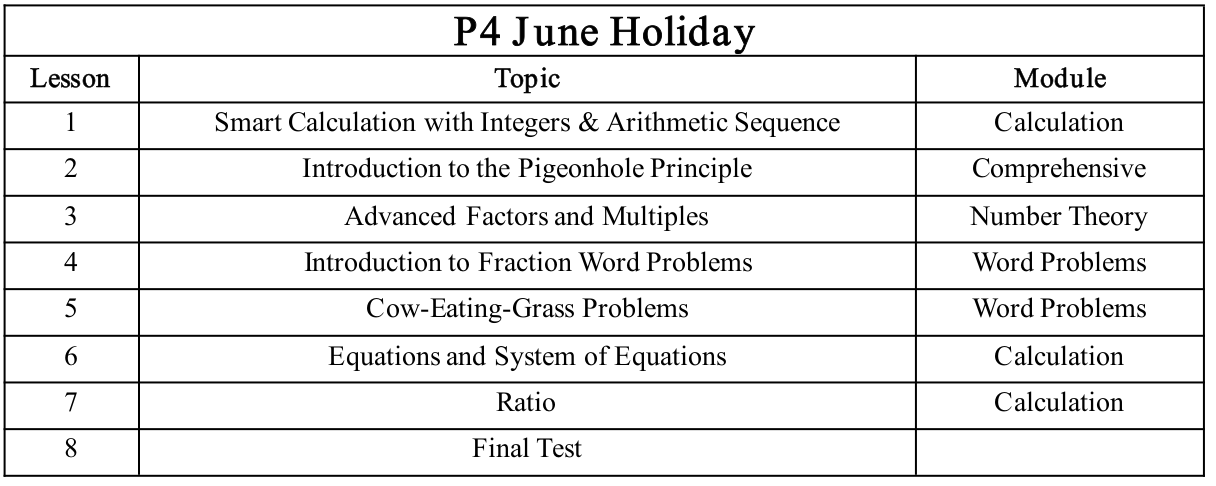
Feature 1: Key Modules and Core Knowledge During the P4 June Holiday programme, our focus will be on two main modules: Word Problems and Calculations. The word problem module carries the highest weight in NMOS, and fraction word problems are among the most frequently tested topics. Meanwhile, topics in the calculation module—such as equations and systems of equations, and ratio—are not only core this term but also essential foundations for tackling more complex word problems later. Mastery of these areas is crucial for effective NMOS preparation.
Feature 2: Strengthening Foundations and Applying KnowledgeOther modules will also be extended to deeper applications. For example, after learning the basics of factors and multiples in Semester 1, students will now explore prime factorisation, as well as applications of HCF and LCM. This approach consolidates prior learning while introducing new concepts, ensuring a gradual, thorough understanding. It prepares students not only for NMOS but also gives a strong head start for RMO and APMOPS preparation.
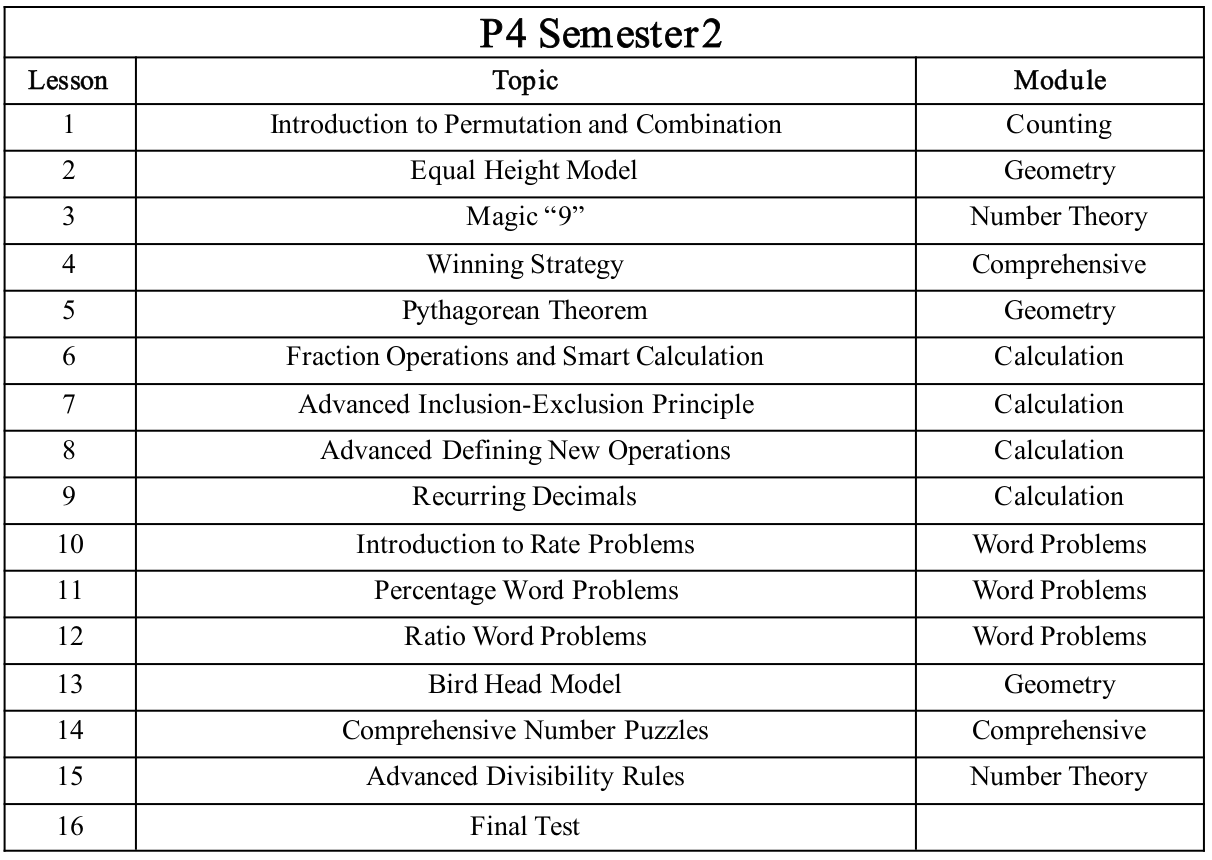
Feature 1: Building on Prior Knowledge, Gradually DeepeningSemester 2 builds on the June Holiday programme, progressing from Fraction Word Problems to more challenging Percentage and Ratio Problems. Students will learn to convert between fractions, percentages, and ratios, raising both the breadth and depth of key topics to NMOS-level standards. This ensures they not only understand the concepts but also apply them effectively.
Feature 2: Learning Knowledge and Mathematical ThinkingTackling Olympiad problems requires more than just knowledge—it demands the ability to analyze and reason mathematically. In Semester 2, we use the Inclusion-Exclusion Principle to develop students’ whole-to-part thinking, and the concept of Winning Strategies to cultivate inductive and recursive reasoning. By the end, students learn to analyze, strategize, and solve complex Olympiad problems independently.
3. Teacher IntroductionTeacher BoQian (Teach in English)
Teacher Bo Qian is from Changchun, Jilin, China. At the age of 16, he achieved the highest score in the high school entrance examination and was awarded a full scholarship to Raffles Institution, Singapore’s top-tier junior college. This marked the beginning of his academic journey in Singapore, where he later graduated from the National University of Singapore (NUS). With 15 years of experience living in Singapore, he possesses a profound understanding of the local education system, academic pathways, and student needs.Teacher Bo Qian has garnered accolades in numerous national and international competitions, including: • Gold Medal in the Hua Luogeng Gold Cup Mathematics Competition• Perfect Score in the American Mathematics Competition (AMC8)
• Top 1% in the AMC10/12, qualifying for the American Invitational Mathematics Examination (AIME)
Teaching Experience & Results With over 7 years of local teaching experience, he has systematically studied Singapore’s curriculum and mainstream competitions (e.g., NMOS, APMOPS, RMO). Under his guidance, dozens of students have achieved outstanding results in prestigious contests: 2023: • NMOS: 12 Gold Medals (2 students ranked Top 30)
• APMOPS: 1 Platinum Award + 10 Gold Medals
• RMO: 7 High Distinctions (HD)
• IMSO: 1 Gold Medal
2024: • APMOPS: 1 Platinum Award + 2 Gold Medals
• NMOS: 11 Gold Medals
• RMO: 6 High Distinctions (HD)
4. Teaching Model
Three Key Features Parent Observation – One parent may sit in during class to observe without disrupting lessons. Refund Anytime – Tuition is refundable on a pro-rated basis. Dual-Teacher Classroom – One main teacher delivers lessons while an assistant provides real-time student feedback.
Teaching Principles Guidance over Spoon-Feeding – We never directly give solutions or force memorization. No Leaving Without Understanding – Students must correct all errors from pre-tests, homework, class examples, and post-tests before leaving. Cultivating Achievement – We encourage rather than criticize, fostering confidence and motivation.
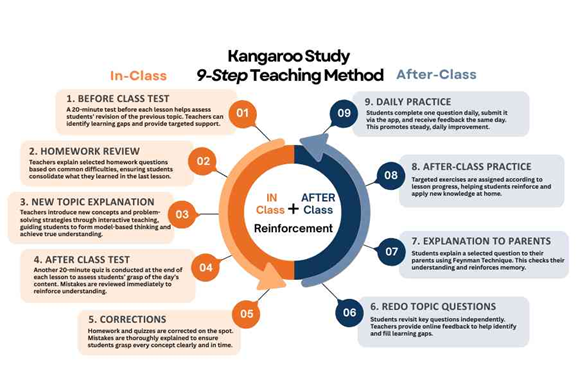
Nine-Step Teaching Cycle From example explanation to post-class review, ensuring mastery and strong study habits.
5. Course Schedule
(1)June Holiday: Period 1: May 30 – June 7, 2026
(4 days on, 1 day off; Break on June 3)
Period 3: June 19 – June 27, 2026
(4 days on, 1 day off; Break on June 23).
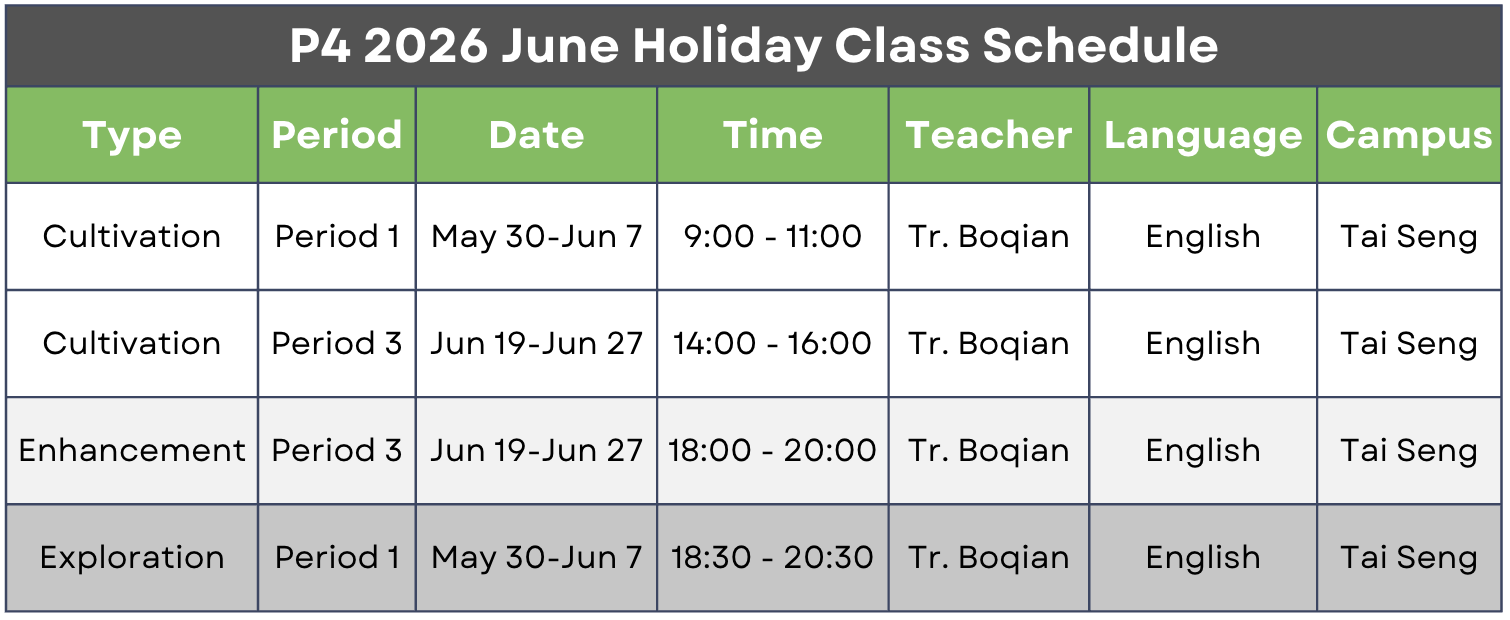
(2)Semester:Start from 4th July, 2026 (Weekly Lesson)
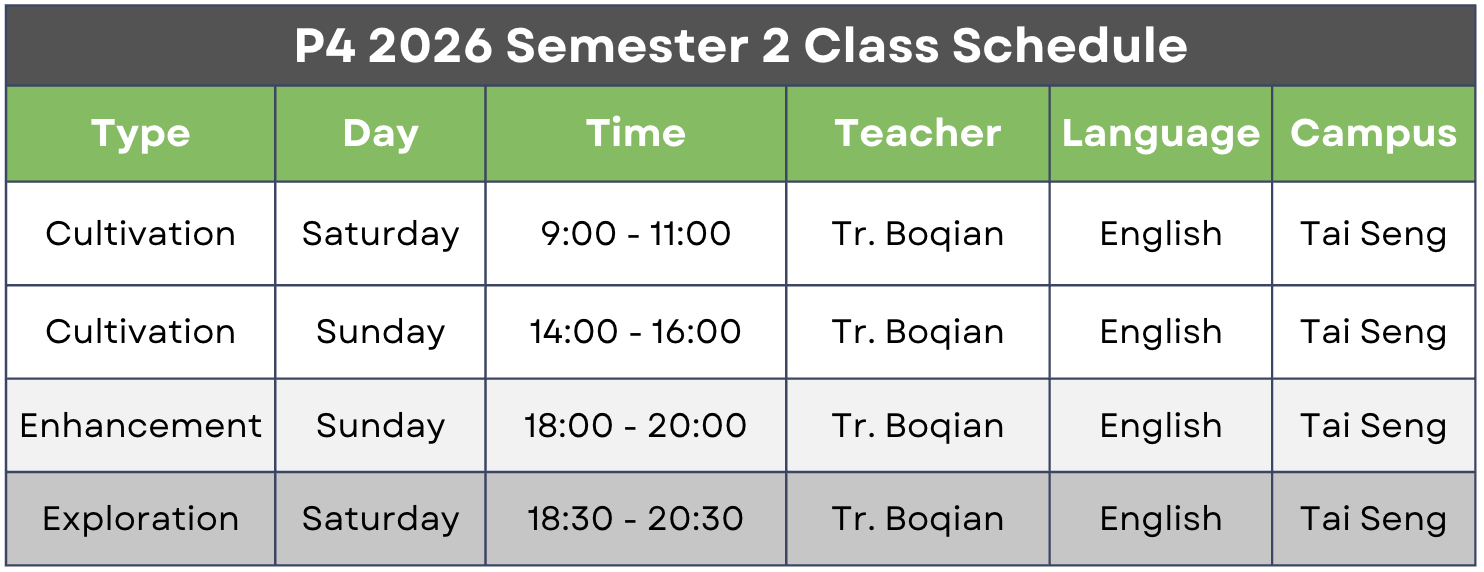
1. Lesson Format: Physical Classes
2. Locations:
• Tai Seng Campus
#02-12, Grantral Mall, 601 MacPherson Road, Singapore 368242
3. Class Capacity: 16 students
4. Course Fees: $120 per lesson.
June Holiday Class (8 Lessons): $120 × 8 = $960
Semester 2 Class (16 Lessons): $120 × 16 = $1,920
NO Registration Fee; NO Deposit; NO Material Fees
6. Enrollment NotesPriority Enrollment for Current Students From March 6th, 5:00 PM the system will auto-generate orders for both the June Holiday & Semester 2 courses for current students. They can confirm by paying within the priority period: March 6th(Fri), 5:00 PM – March 15th (Sun) 11:59 PM. New Student Enrollment Begins March 6th, 5:00 PM. Students must first take a entrance test to determine the appropriate class level. For booking and inquiries, contact Teacher BoQian via WeChat/WhatsApp.
| 


 发表于
发表于