|
|
本帖最后由 Nora老师 于 2026-3-5 18:51 编辑
Kangaroo Study P2 June Holiday & Semester2 Enrolment Guide
The lower primary years(P1-P3)are often the most confusing stage for many children and parents. For P2 students in particular: With the replacement of GEP classes by advanced modular courses, Olympiad Math, and DSA pathways, what should children learn? How should they plan?
When facing systematic and challenging mathematical concepts, how can we spark and sustain a child’s interest and motivation?
If children struggle with calculation errors, carelessness, or lack of independent learning, how can we cultivate proper study habits?
In the teachers’ view, the answers to these three questions are interconnected and indispensable. Only by nurturing children from three dimensions — knowledge, interest, and habits — can we truly help them develop lifelong mathematical abilities.
I. Foundational Knowledge — Spiral Progression, Never “Cramming”
After entering primary school, many capable students feel:
“School math is too slow, too little, too simple.”
At the same time, every year parents lament:
“We only realized before the GEP test that many question types were unfamiliar.”
“In P5, after being recommended by school to take NMOS, my child couldn’t solve most of the questions.”
The core issue lies in treating Olympiad Math as short-term exam preparation rather than long-term cultivation of mathematical thinking.
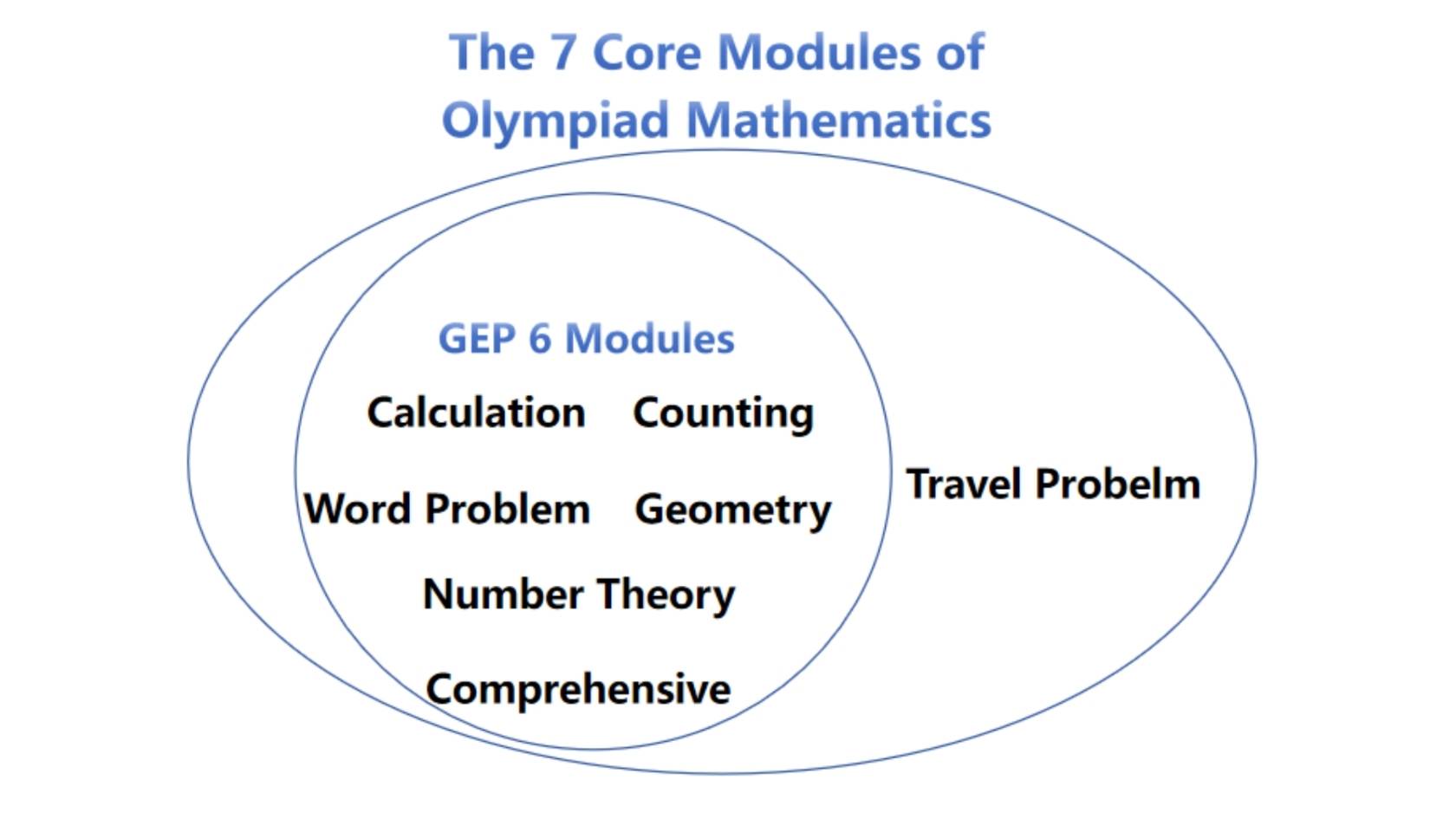
In fact, Olympiad Math is a structured system covering seven major modules: Calculation, Counting, Number Theory, Word Problems, Speed & Distance, Geometry, and Comprehensive Problems. It should begin at a level children can understand, progressing spirally and deepening continuously. Ideally, children can gradually enter the system from the end of K2, building competence through structured learning and later validating results through competitions.
In response to post-GEP reform requirements, Kangaroo Learning Centre has distilled “Six Major Modules · 40 Core Knowledge Points,” covering Calculation, Logical Reasonings, Word Problems, Geometry, Counting, and Number Theory. These are systematically distributed across P1–P3 courses to help children progressively build a complete mathematical thinking framework.
Within this system, children from lower primary can:
Develop number sense, cultivate logical reasoning and learn to solve problems using analysis and drawing models.
By the time GEP selection arrives, they are already well prepared.
When advancing to higher-level Olympiad math, progress becomes natural and seamless.
II. Cultivating Interest — Guidance Creates “A Sense of Achievement”
Many parents say:
“My child isn’t proactive — I have to keep pushing.”
“My child is afraid of difficult questions and lacks confidence.”
The root cause is often a lack of interest.
At Kangaroo Learning Centre, we believe true interest comes from a sense of achievement in learning, not from external rewards.
Through guided teaching, teachers help children learn how to think, not just what to memorize. Mistakes are never criticized; instead, attempts are encouraged. Children are guided to discover problems themselves, adjust their thinking, and find solutions independently.
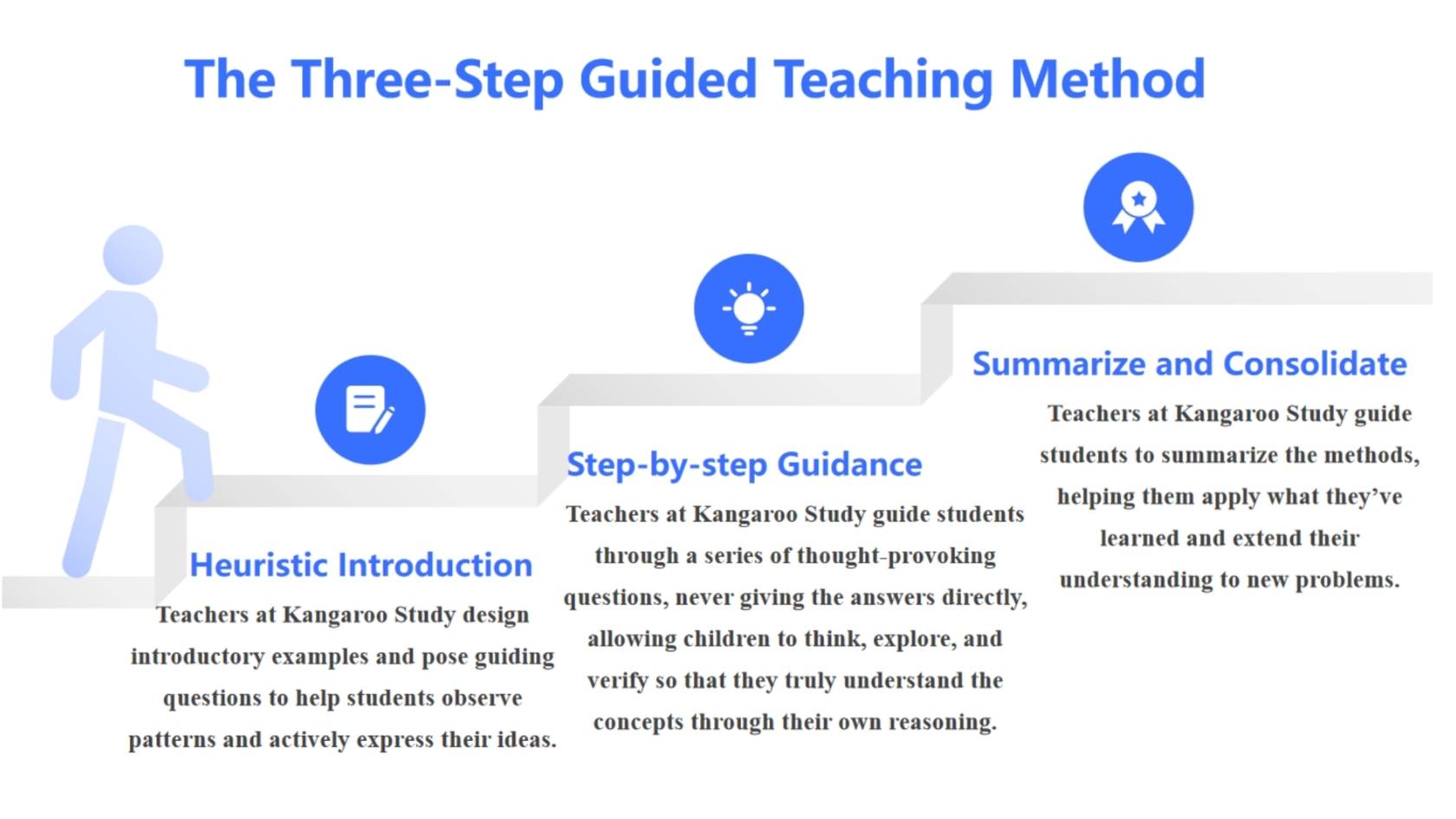
When children repeatedly experience moments like:“I figured it out!”, I discovered the pattern!”Learning becomes enjoyable, and confidence is ignited. They begin to enjoy thinking and exploration, no longer fearing challenges. They face mathematics actively, attentively, and confidently. Such learning not only improves ability but transforms mathematics into a journey filled with discovery and joy.
III. Cultivating Habits — From “Being Pushed” to “Self-Driven”
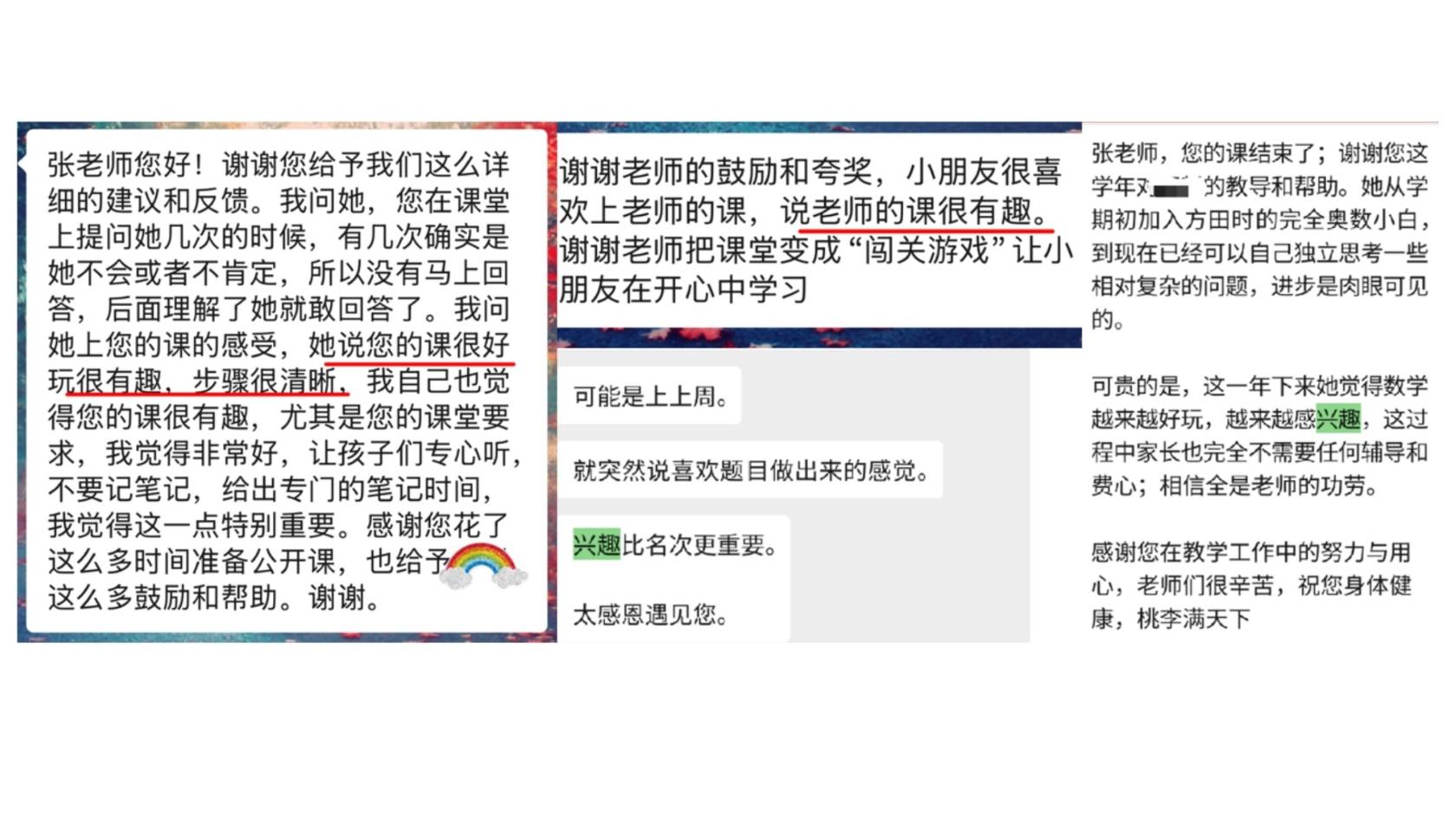
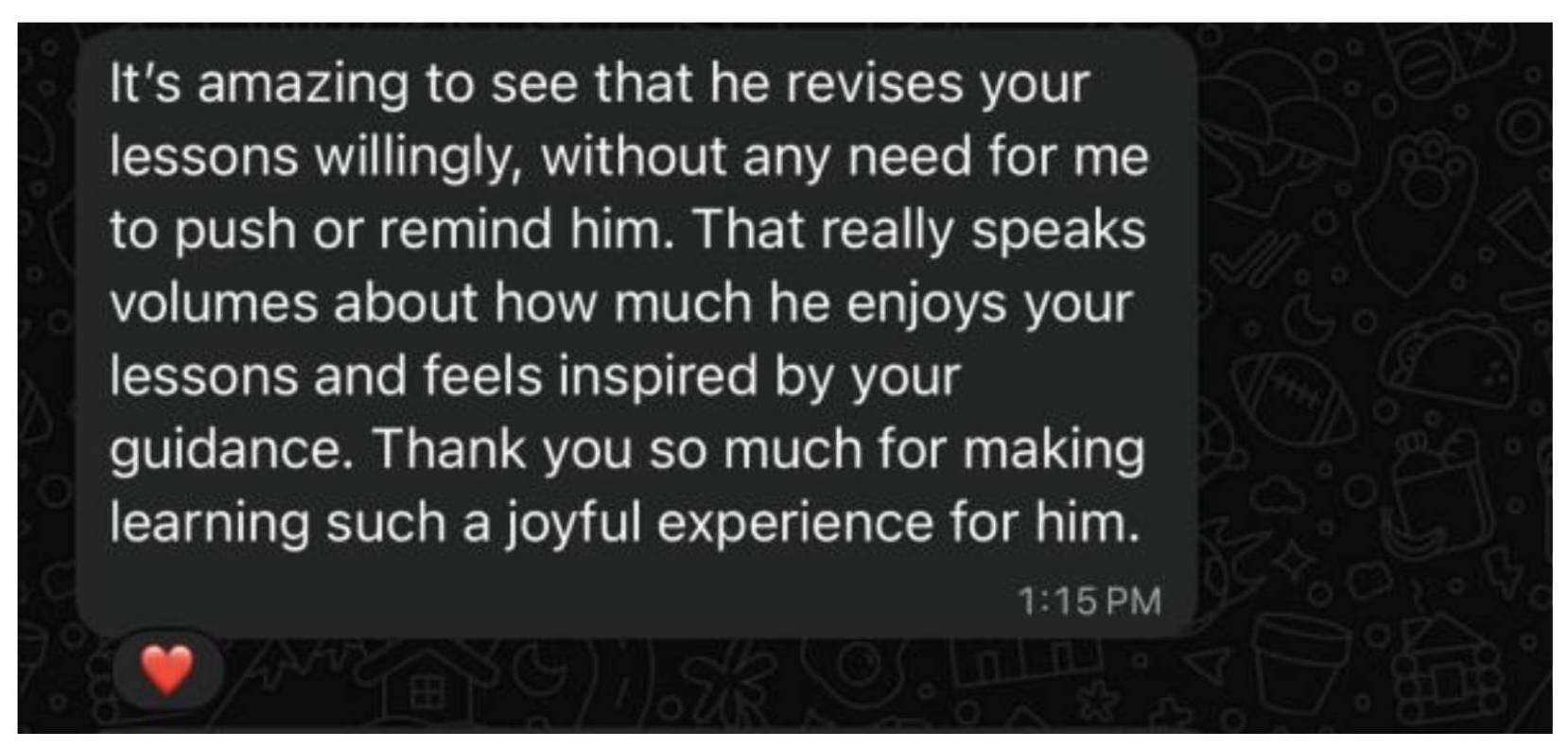
Many children lose focus in class, make careless mistakes, and fail to revise. The fundamental reason is the lack of proper study habits. Kangaroo teachers not only teach knowledge but also serve as “habit coaches,” helping good habits naturally form through guidance and feedback.
1. Listening Habits
In class, we emphasize the “PSLE Listening Method”:
Put down your pen, sit upright, and look at the teacher.
Through questioning, tone variation, and interaction, teachers capture attention and train children to listen efficiently.。
2. Problem-Solving Habits
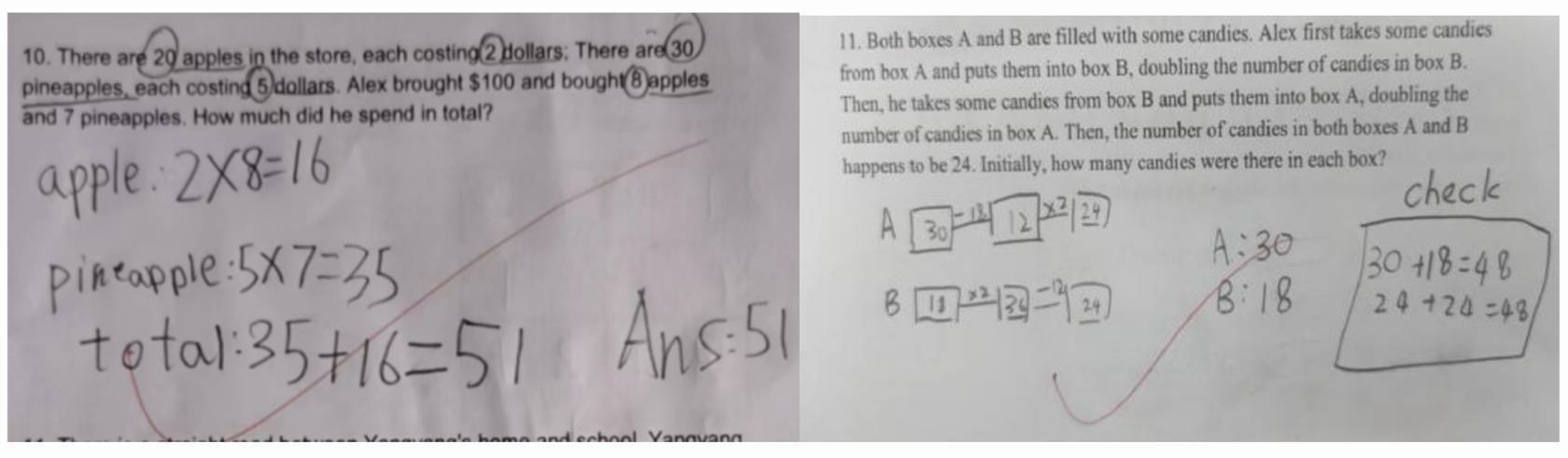
“Carelessness” often stems from not knowing how to analyze questions. Teachers train students to:
Circle key information, Mark relational words, Write the meaning of equations.
Through a “Teach–Practice–Check–Feedback” cycle, standardized problem-solving becomes a natural habit.
3. Revision Habits
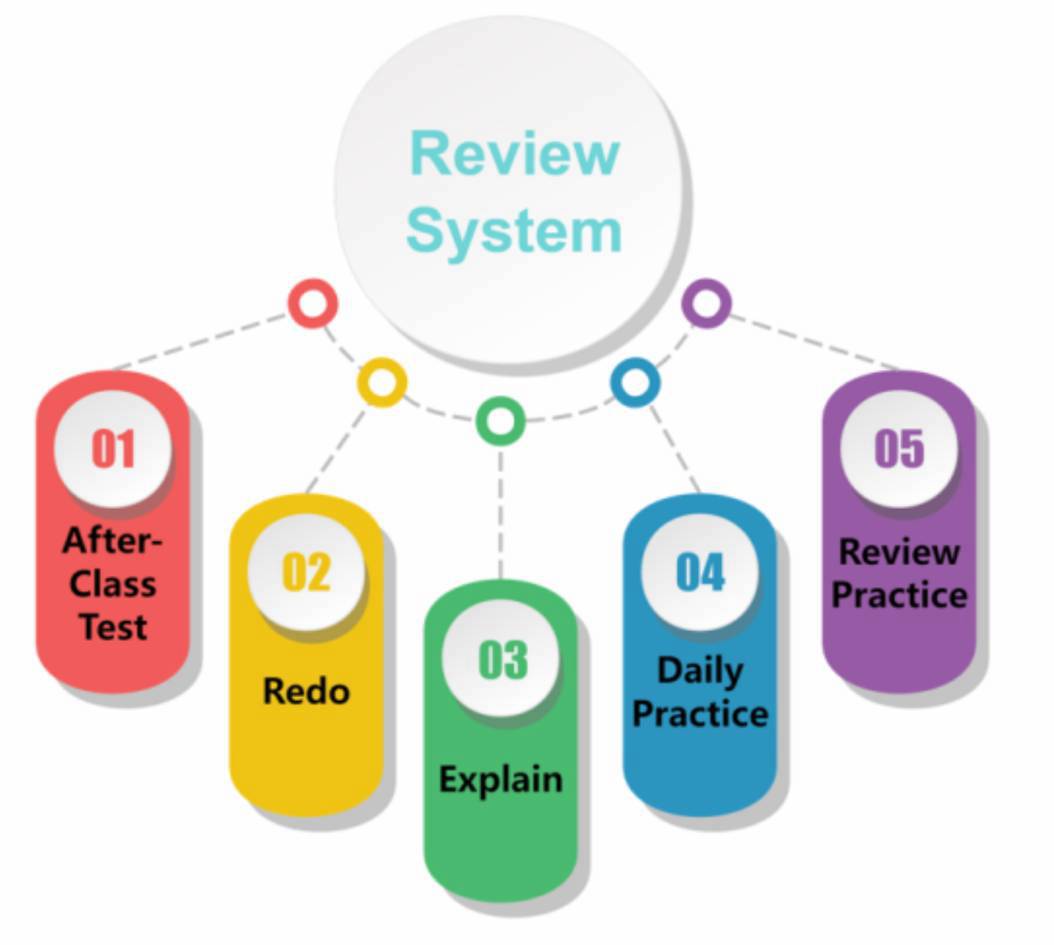
Based on the forgetting curve, we implement a systematic revision mechanism:
Post-lesson test → Redo example questions → Explain questions to parents → Daily practice → Monthly revision.
Through continuous reinforcement and feedback, children develop independent revision and self-management skills.
IV. Course Outline
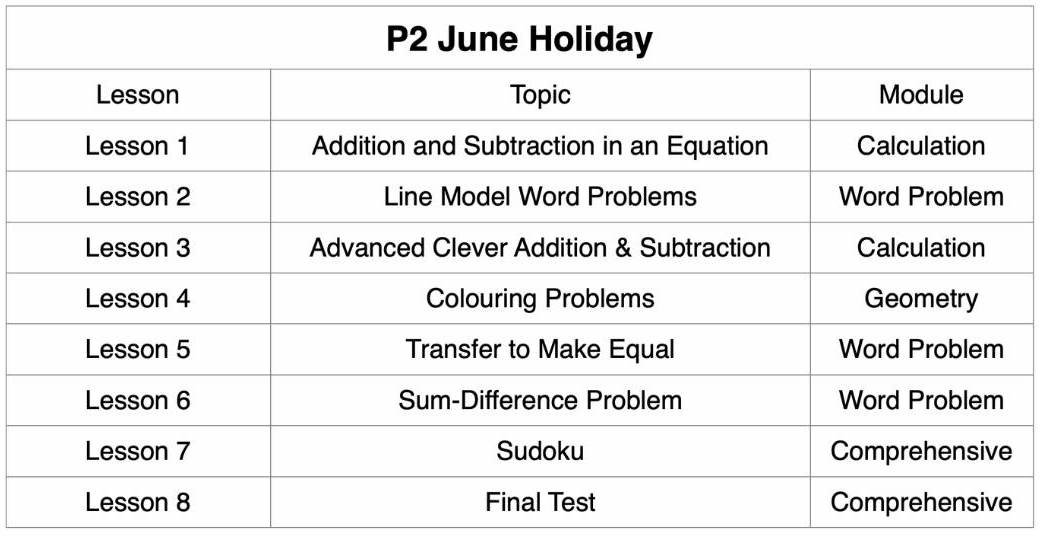
The P2 June Holiday Mathematics course focuses on equation-based addition and subtraction and advanced mental calculation techniques to strengthen computational skills. Through line model diagrams, transfer-and-equalization problems, and sum-and-difference problems, students reinforce their word-problem solving strategies. Coloring problems help cultivate geometric spatial thinking, while Sudoku enhances logical reasoning. The course comprehensively consolidates core P2 knowledge and improves problem-solving skills and mathematical thinking.
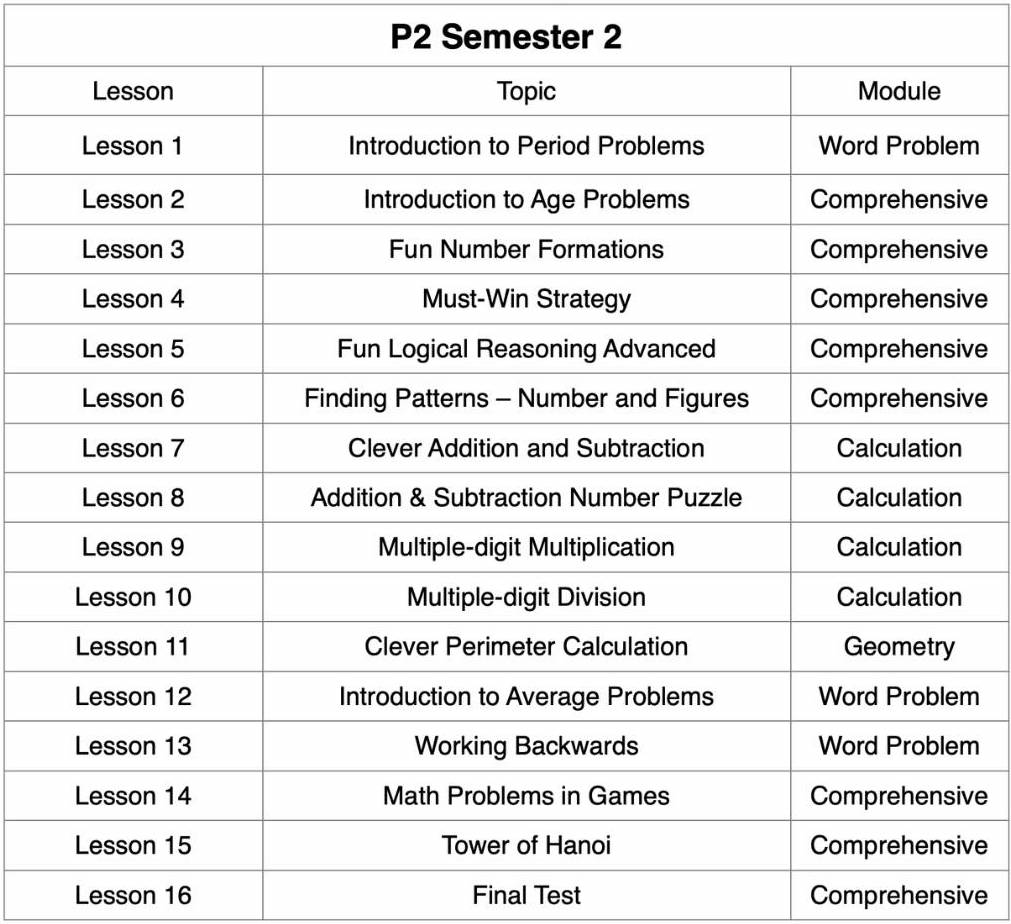
The P2 Semester 2 Mathematical Thinking Course is comprehensive and progressively structured, covering four core areas: logical reasoning, advanced calculation, geometry foundations, and classic word problems.
The course begins with engaging topics such as cyclic problems, age problems, number arrays, winning strategies, and advanced reasoning to cultivate structured thinking and logical analysis.
Through smart addition and subtraction, vertical puzzles, and multi-digit multiplication and division, students systematically strengthen their computational foundations, improving speed and accuracy.
Clever perimeter problems help establish geometric spatial awareness and basic shape-solving techniques.
Key word problem types such as averages and the unitary method are taught through structured problem-solving strategies and mathematical modeling.
The curriculum also integrates pattern recognition, mathematical games, and the Tower of Hanoi, allowing students to deepen thinking skills, enhance problem-solving abilities, and strengthen mathematical literacy in an enjoyable classroom environment — laying a solid foundation for upper primary learning.
V. Teacher Introduction (Tr. Smith, Lessons in English)

Tr. Smith has over four years of experience teaching Mathematics and Computer Science. With this interdisciplinary background, he excels at transforming abstract and complex concepts into clear, manageable steps and thinking pathways that children can easily understand.
As the Head of the Primary 1 and Primary 2 Olympiad courses, Tr. Smith has long guided students in preparing for GEP selection, SASMO, SMKC, and other foundational competitions, helping them build strong mathematical foundations.
Beyond his strong professional expertise, he is skilled at creating a classroom atmosphere that is lively yet orderly — balancing warmth and structure, encouraging students to express themselves and think bravely.
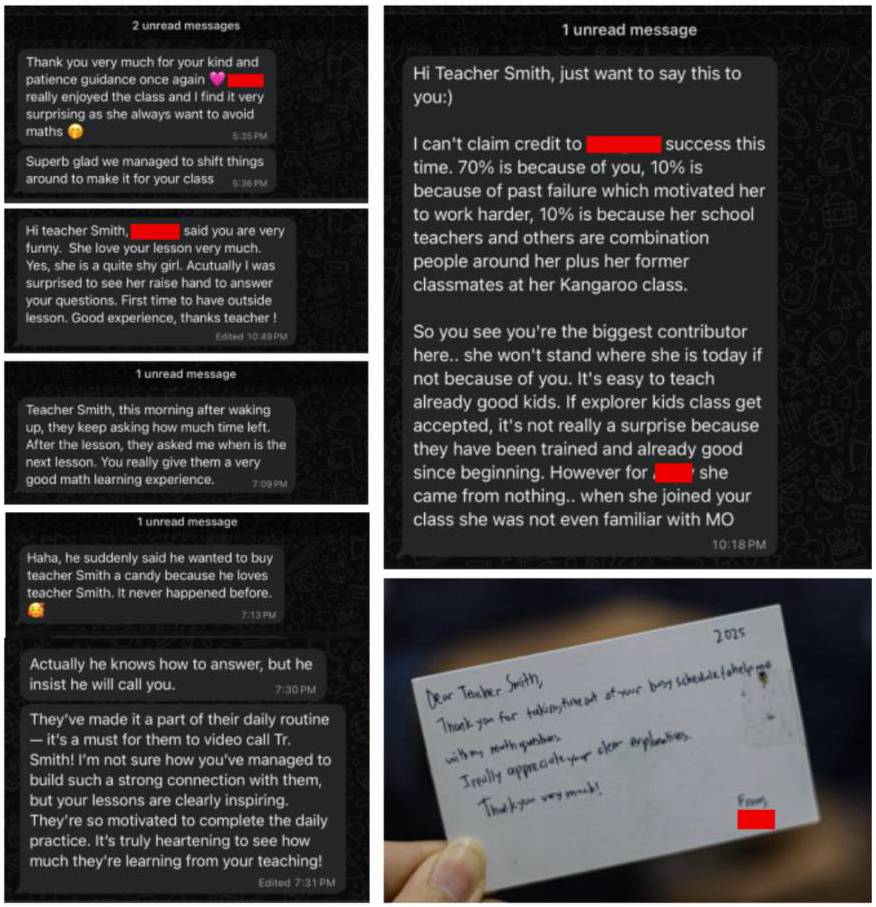
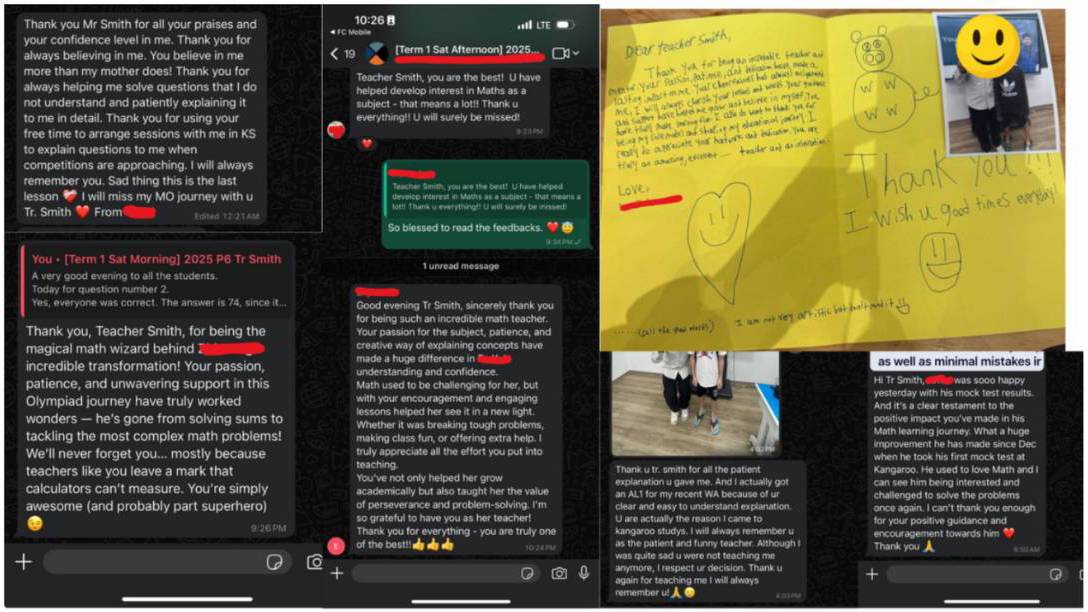
Parents and students highly recognize and appreciate Tr. Smith.
VI. Course Arrangement
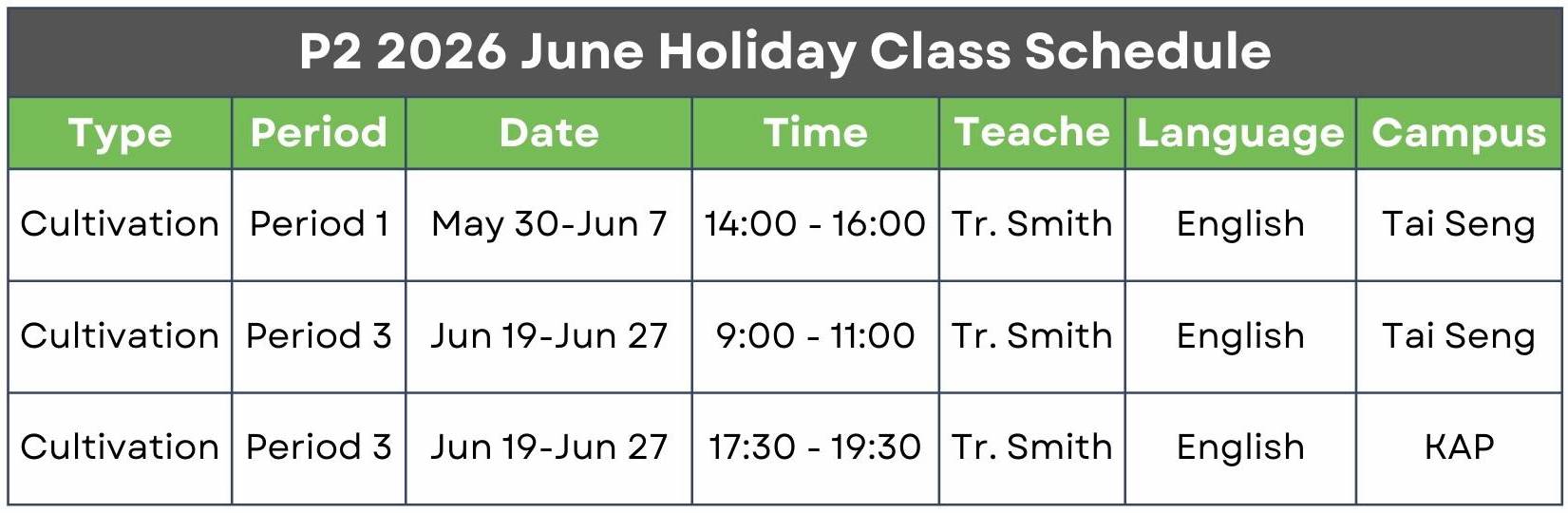
2026 June Holiday Class Schedule:
Period 1: May 30 – June 7, 2026
(4 days on, 1 day off; Break on June 3)Period 3: June 19 – June 27, 2026
(4 days on, 1 day off; Break on June 23)
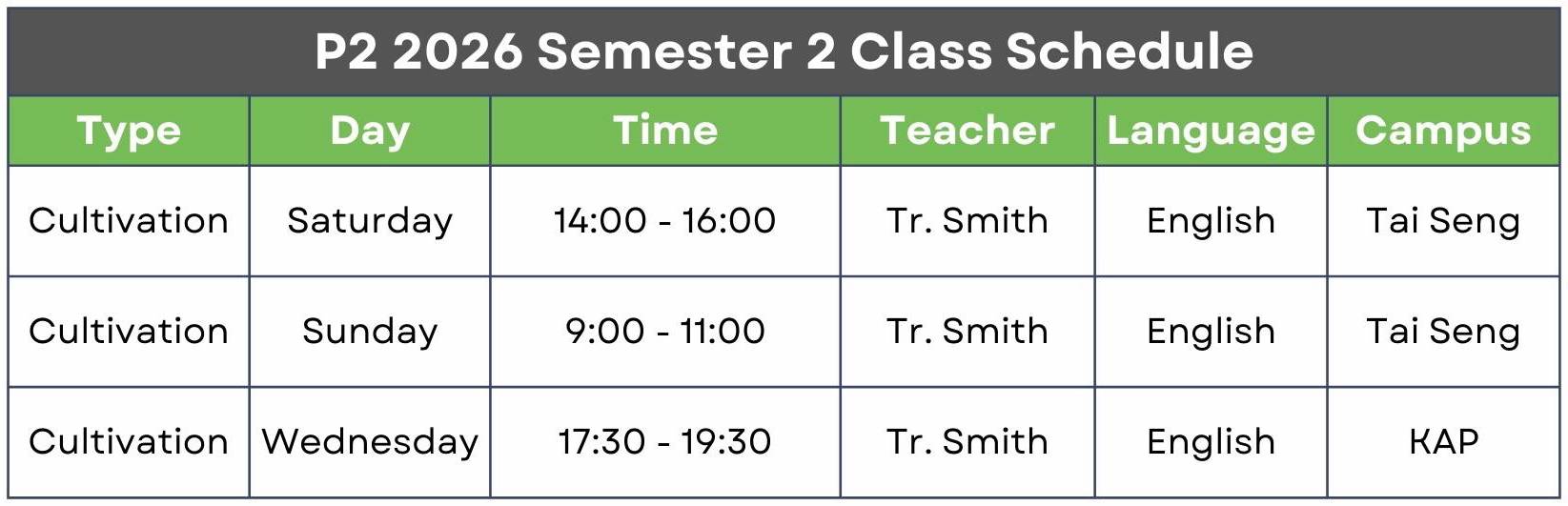
2026 Semester 2 Class Time:
Starting from 3rd of July 2026 (Weekly):
1. Lesson Format: Physical / In-person Classes
2. Locations:
• Tai Seng Campus
#02-12, Grantral Mall, 601 MacPherson Road, Singapore 368242
• King Albert Park Campus
#02-09/21, Dunearn Village, Dunearn Road, Singapore 589472
3. Class Capacity: 12 students
4. Course Fees: $120 per lesson.
June Holiday Class (8 Lessons): $120 × 8 = $960
Semester 2 Class (16 Lessons): $120 × 16 = $1,920
NO Registration Fee; NO Deposit; NO Material Fees
VII. Registration Information
Before enrollment, students must take a diagnostic test to determine the appropriate class level. To book a test, contact Teacher Zhang via WeChat or WhatsApp.

Through the diagnostic test, we will analyze the child’s current learning level and provide targeted learning recommendations. At the same time, children will listen to the teacher’s explanation of the test questions, allowing them to experience our authentic classroom environment. For more course details, feel free to contact Teacher Zhang anytime.
|
|



 发表于
发表于