本帖最后由 Nora老师 于 2026-1-9 09:30 编辑
P3 Classes Now Open | Kangaroo Study 2026 Semester 1 Enrollment Guide As P2 students move toward the GEP selection year, many children and parents will face important questions:
What exactly is tested in GEP Math? How should we plan ahead?
When math becomes more systematic and challenging, how do we spark and sustain a child’s interest and motivation?
If a child struggles with accuracy, carelessness, or independent learning, how can we build the right learning habits?
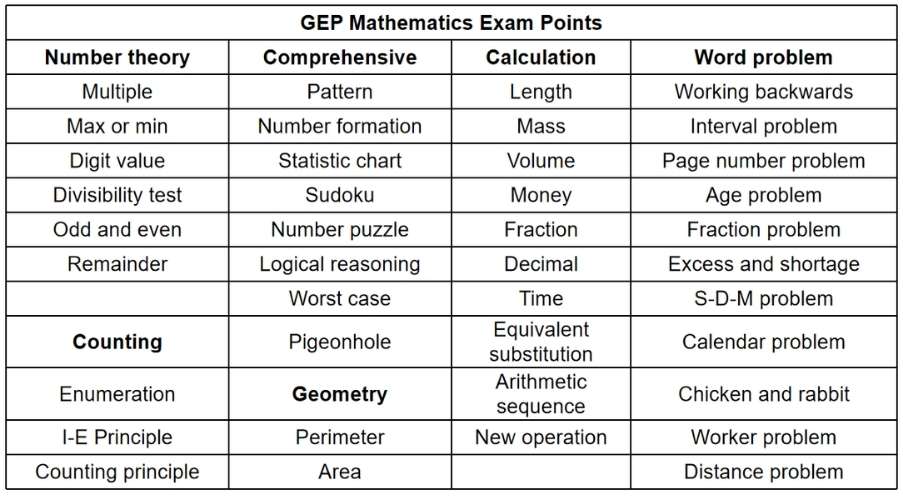
From our teachers’ perspective, these three areas are deeply interconnected. Only by nurturing knowledge, interest, and habits together can we truly build a strong and lasting foundation for a child’s mathematical development. 1. How Do We Support Students Preparing for GEP? I. Comprehensive Coverage of GEP Exam Points In response to the new GEP framework, Kangaroo Study has systematically organized 6 major modules and 40 core exam points that fully align with the reformed GEP Math requirements.
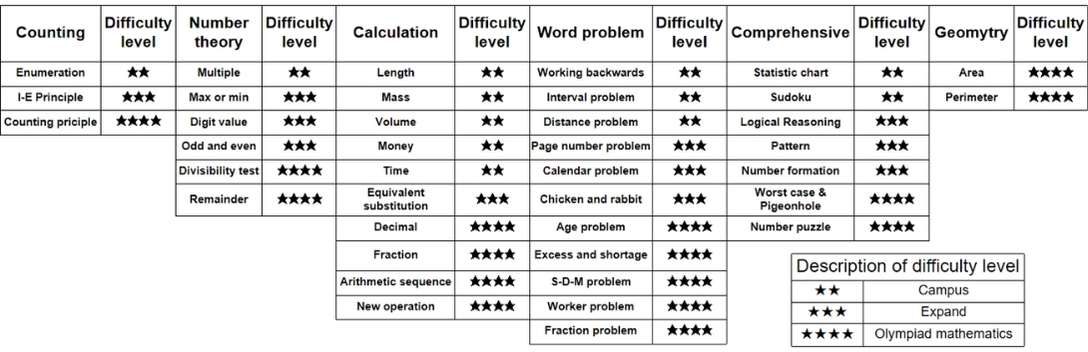
We also conducted an in-depth study of past exam papers, categorized the knowledge points by difficulty, and, based on students’ cognitive development patterns, reasonably broke them down and distributed them across the long-term P2 and P3 courses to help students prepare more effectively.
II. Interest Enlightenment — Guiding Children Toward a Sense of Achievement Many parents often say: “My child isn’t self-motivated — I have to keep pushing.”
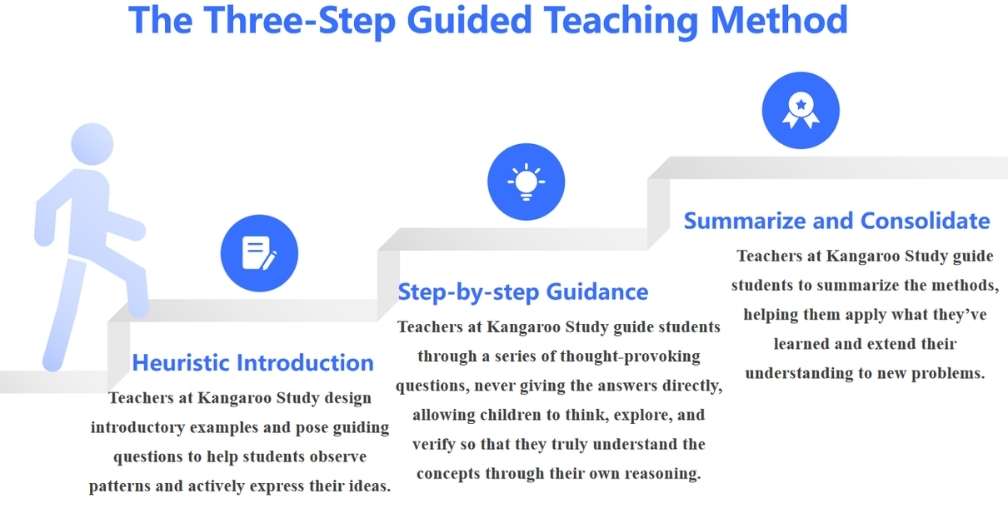
“My child is afraid of difficult problems and lacks confidence.” At the core of these issues lies one key factor — a lack of genuine interest. At Kangaroo Study, we believe true interest doesn’t come from external rewards, but from the sense of accomplishment that grows through learning. Our teachers use a guided learning approach, helping children learn how to think, not just what to do.
Instead of criticizing mistakes, we encourage effort, guide reflection, and help students find their own paths to the solution.
When children experience those “I figured it out!” or “I found the pattern!” moments, learning becomes exciting, and confidence shines through.
They begin to enjoy thinking and exploring, facing challenges with curiosity rather than fear.
This kind of learning not only builds ability, but transforms mathematics into a journey of discovery and joy. III. Habit Enlightenment — From Being Pushed to Self-Driven Many children lose focus in class, make careless mistakes, or skip review altogether.
The real cause isn’t ability — it’s the lack of strong learning habits.
At Kangaroo Study, our teachers are not just knowledge instructors — they are also habit coaches. Through consistent guidance and feedback, good habits are built naturally into every stage of learning.
① Listening Habits
In class, we emphasize the “PSLE Listening Method”: “Put down your pen, sit up straight, and look at the teacher.” Teachers use questions, tone, and interaction to capture attention and help students stay focused and engaged, cultivating effective listening skills.
② Problem-Solving Habits
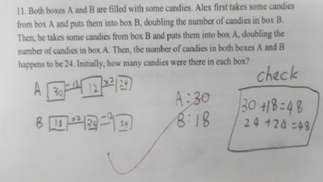
“Careless mistakes” usually come from weak comprehension, not poor calculation.
Teachers model how to identify key information, highlight relational words (like more than, left, in total), and annotate the meaning of each step. Through a consistent cycle of teach → practice → check → feedback, students gradually turn structured problem-solving into a natural habit.
③ Review Habits
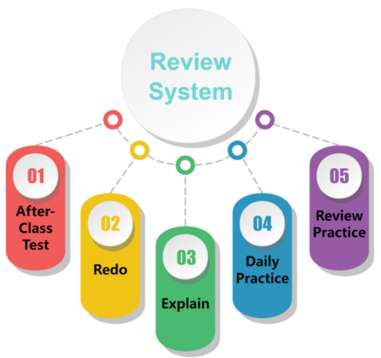
Based on the forgetting curve, Kangaroo Study sets up a systematic review process:
lesson quiz → redo examples → explain one problem to parents → daily mini practice → monthly revision. This steady rhythm of reinforcement and reflection helps students develop true independence and self-management in learning.
2. Lesson Overview | | | | | | | | Intro to Logical Reasoning | | | | | | | | | | | | Area of Rectangles and Squares | | | Clever Four Operations Calculations | | | Comprehensive Sum-Difference-Multiple Problem | | | | | | Intro to Decimals & Basic Operations | | | | | | Introduction to Distance Problem | | | | | | | | | | | | | |
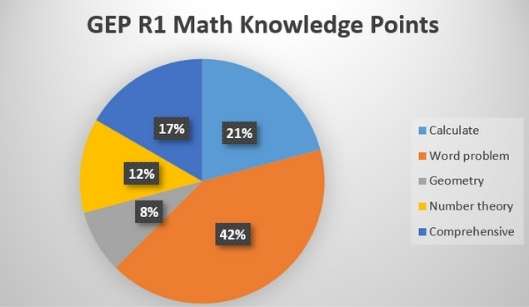
Learning Focus (1) Word Problems – The Core Focus This is both the largest and most challenging component in GEP math, making up around 42% of test content. Many students struggle even to interpret the questions.
Holiday Term – We start with average and unitary problems to build confidence and problem-solving habits.Semester 1 – We cover the Top 10 classic word problem types, identifying key features of each and building a complete framework for solving them systematically.
(2) Calculation – Strengthening Accuracy & Speed Solid integer calculation skills are essential before moving to fractions and decimals in P4. Holiday Term – Master smart addition/subtraction and begin multi-digit multiplication/division. Semester 1 – Focus on smart multiplication/division techniques to improve both speed and accuracy.
(3) Geometry – Breaking Through a Common Weakness Perimeter and area are recurring GEP challenges. Holiday Term – Learn efficient perimeter-solving methods, including for irregular shapes. Semester 1 – Deepen understanding of rectangle/square areas, with integrated problems involving both perimeter and area.
3. Teacher Introduction Mr. Zhang (Lessons in Chinese) An S-level (highest) permanent instructor at Fangtian Education, Mr. Zhang became Deputy Head of Primary Math within his first year. He is well-versed in Olympiad math systems and competition question design. Many of his students have won gold medals in the Spring Cup (equivalent to RMO). In 2023, 75% of his students qualified for the GEP 2nd round, with 25% admitted into the program. In 2024, 87.5% of his students medaled in SASMO, with 25% winning gold.
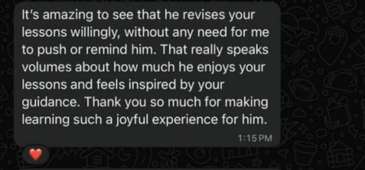
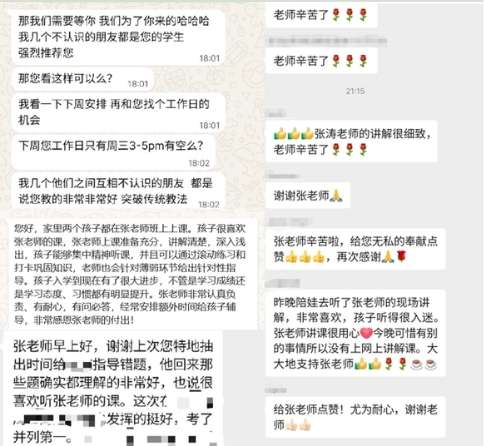
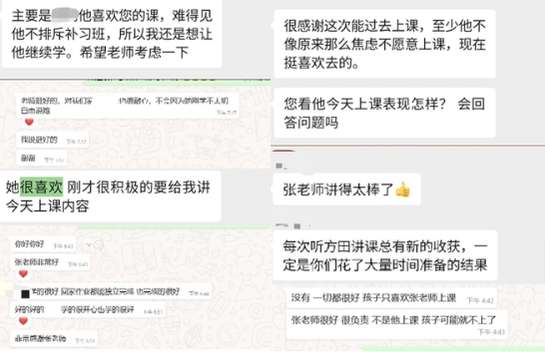
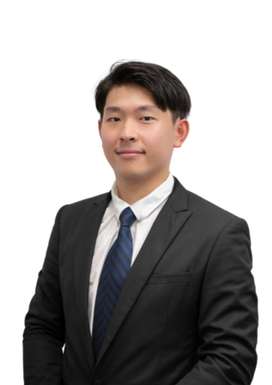
Parents think highly of Tr. Zhang as well: Teacher Yeoh Ming Wei (Teaches in English) Coming from Penang, Malaysia and a graduate from Nanyang Technological University (NTU), Teacher Ming Wei is a math enthusiast. He participated in various mathematics competitions in his student years and won several titles. In his pre-university studies, Teacher Ming Wei achieved the perfect result and top 1% score in the nationwide examination STPM. Consequently, he was awarded the prestigious ASEAN Undergraduate Scholarship to study Data Science and Artificial Intelligence at NTU. Some of the brightest achievements by him are: ・Bronze medal in IMO Selection Test ・Gold medal in Kangaroo Study's Competition Malaysia
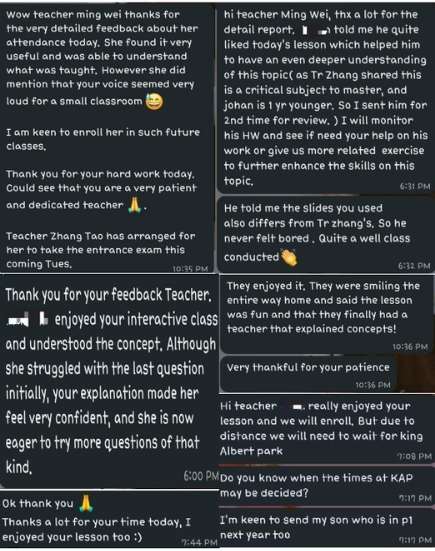
Parents think highly towards Tr. Ming Wei too:
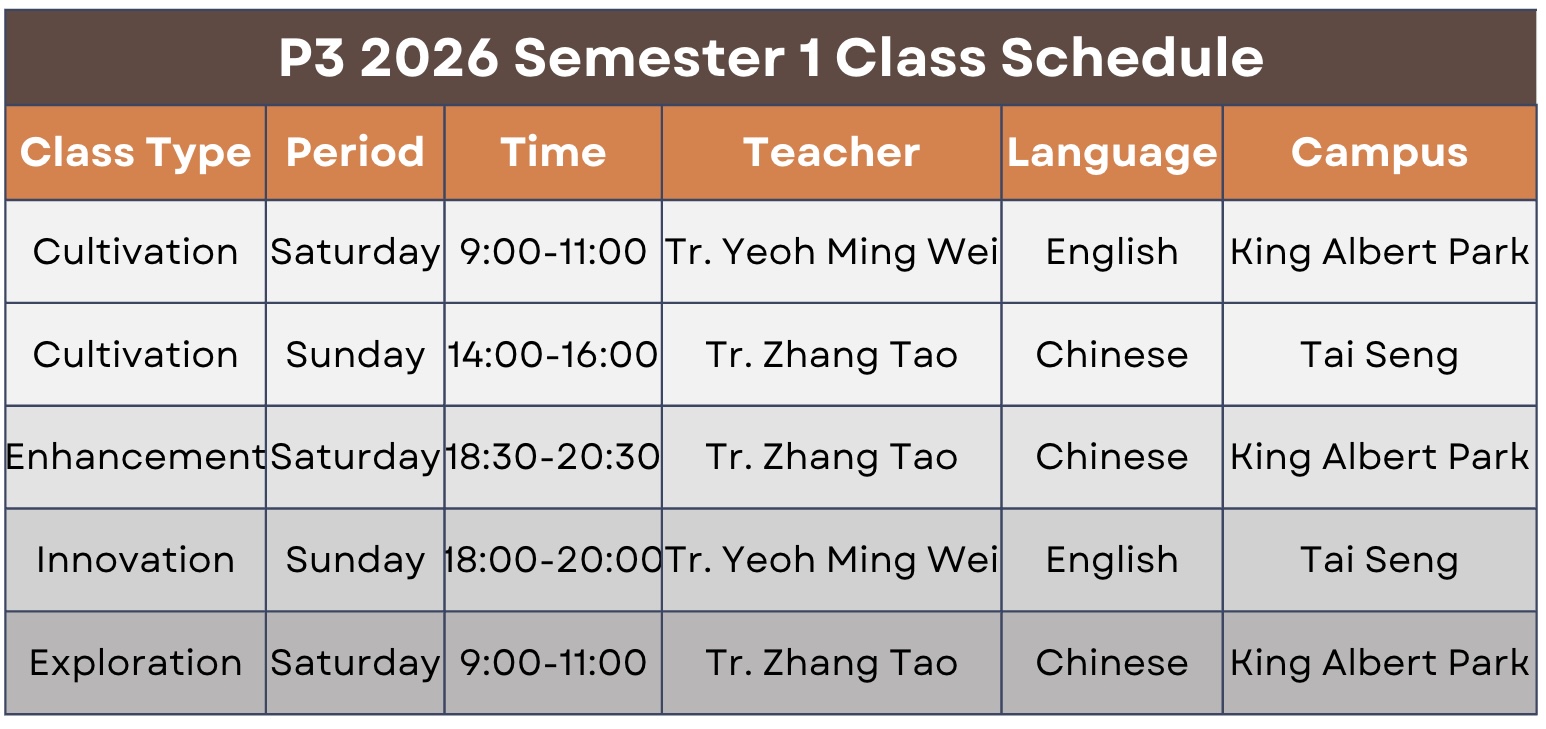
4. Course Schedule (1)2026 Semester 1 Class Time:Starting from 9th January 2026 (Once weekly)
(2)Class Mode:Offline Class
(3)Class Location:Tai Seng: #02-12, Grantral Mall, 601 MacPherson Road, 368242; King Albert Park:Singapore 589472,#02-09&02-21 (4)Class Size:Max16 students
(5)Fees:S$120 per lesson, 16 lessons in Semester 1,S$120 × 16 = S$1920
5. Enrollment Notes New Student Enrollment Students must first take a diagnostic test to determine the appropriate class level. For booking and inquiries, contact Teacher Zhang via WeChat/WhatsApp. Through the entrance test, we will analyze the children's current learning situation and provide targeted learning suggestions. At the same time, the children will listen to the teacher explain the test questions, experiencing and understanding our real classroom environment. For more details about our courses, please contact Tr. Zhang.
| 


 发表于 2026-1-5 16:17:39