本帖最后由 Nora老师 于 2026-1-9 09:18 编辑
P5 Classes Now Open | Kangaroo Study 2026 Semester 1 Enrollment Guide
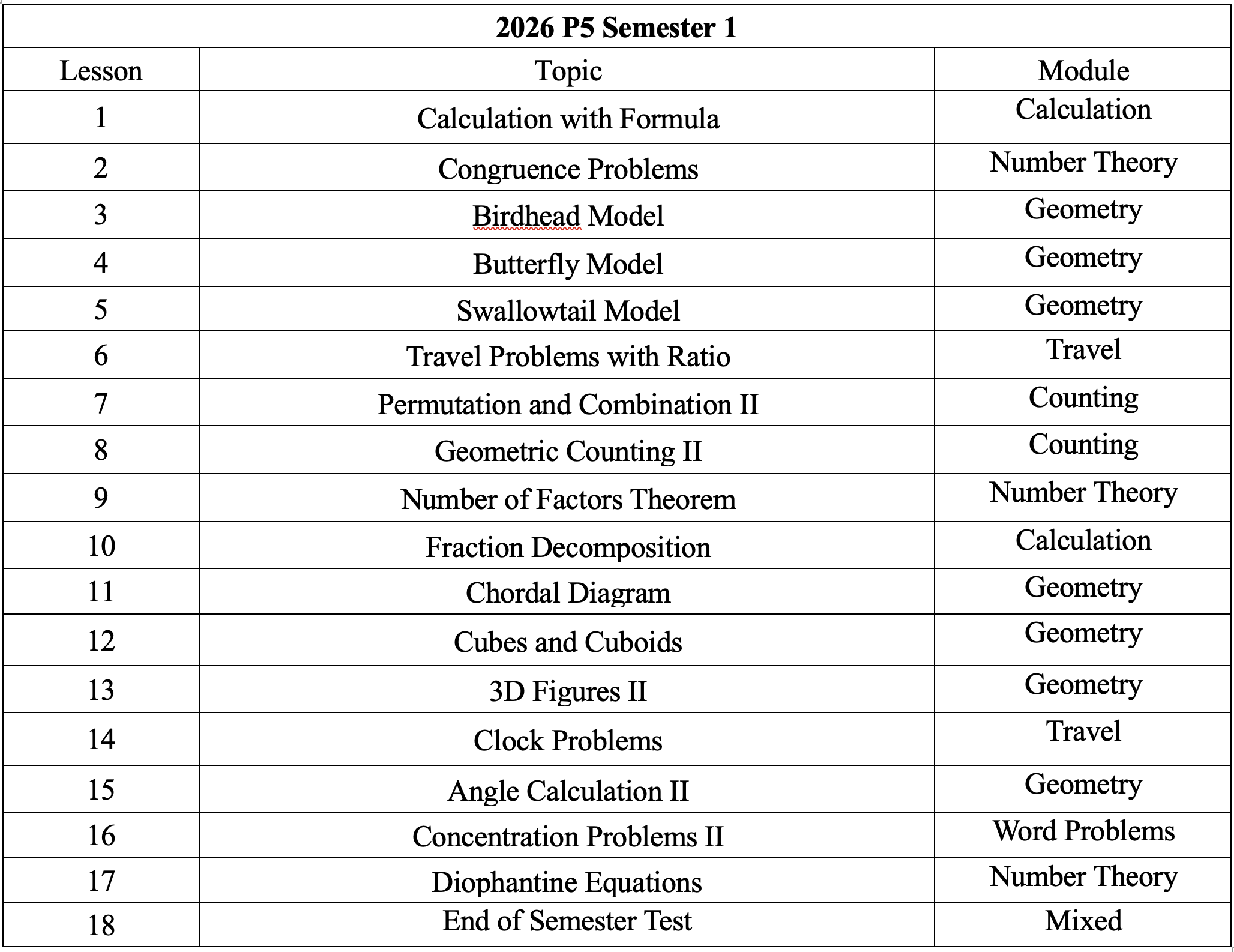
P5 students will face their first high-difficulty, large scaled Math Olympiad competition - NMOS, with some also participating in RMO and APMOPS. These competitions serve as crucial platforms for students to validate their learning and showcase their abilities, while also providing significant advantages for DSA applications. Notably, students selected for the IMSO national team can even receive direct offers from NUSH. To prepare, students must use this holiday period to systematically complete their Math Olympiad knowledge points, aligning their studies more closely with such competition content as well as difficulty levels, thereby enhancing their competitiveness in these prestigious contests. 1. How to Prepare? (1)Knowledge sector The two most heavily tested modules in NMOS are word problems and geometry, accounting for nearly 50% of the exam. For word problems, questions on fractions and ratios are common in NMOS, RMO, and APMOPS. These include calculations with fractions and percentages, ratios problems, ratio word problems, classic fraction word problems, and complex fraction applications (work problems, travel problems, mixture problems, etc.). In geometry, the focus will be on angle problems and proportional models which are the key challenging topics in P5. To prepare for next year's competitions, we will begin introducing ratios, ratio word problems, and percentage word problems during the holidays. After mastering these concepts, students will have covered all foundational knowledge on fractions, percentages, and ratios. Subsequent lessons will build on this foundation, gradually progressing to more advanced and difficult problem types. (2)Thinking sector As the three major Math Olympiad competitions approach, the difficulty level of our studies will increase significantly. This demands that we develop strong Olympiad problem-solving mindsets and strategies that give us an edge - such as model thinking, extreme case analysis, optimization concepts, transformation and induction techniques. Once these thinking methods are properly developed, students will have clear approaches and strategies for tackling difficult problems. However, cultivating these thinking skills requires considerable time, making this holiday period's intensive study the golden opportunity to develop them. We must seize this chance for focused training. (3)Time planning The NMOS exam covers a wide range of topics, from the Chickens and Rabbit problems learned in P2 to advanced geometric models like the Butterfly model and Swallowtail model taught in P5. Therefore, comprehensive and systematic revision before the actual exam is necessary. With NMOS scheduled for mid-July, the final golden revision period falls during the June holidays. We will complete the learning and consolidation of all foundational knowledge in P5 Semester 1, accompanied by systematic practice exercises. This preparation will enable P5 students to conduct thorough module-by-module revision during the June holidays, helping them significantly improve both their mathematical abilities and problem-solving techniques. 2. Our Curriculum After analyzing high-frequency topics from the three major Olympiads over the past decade and aligning them with current learning objectives, we have planned the following study content:
The key Knowledge points for this semester are as follows: Geometry and Counting——Building foundation on key points During the holiday period, we will focus on two key areas of geometry and combinatorics: the equal height model and permutations & combinations. In primary school Olympiad geometry, there are five fundamental geometric models that are essential for all competitions, with the equal height model being the foundation. Mastering this model is crucial for excelling in primary-level Olympiad geometry. In the P5 spring term, we will build upon the equal-altitude model by exploring its extensions—such as the bird's head, butterfly, and swallowtail models—and expand our study to include solid geometry. Permutations and combinations serve as essential tools for solving complex counting problems, which often appear as high-difficulty finale questions in competitions. During this year-end holiday, we will establish a strong foundation in these challenging Olympiad topics. In the spring, we will further advance into higher-level permutation and combination concepts and learn to apply them to solve geometric counting problems. This structured approach ensures students develop both fundamental and advanced problem-solving skills necessary for competition success.
3. Our Teachers Tr. Tan Yi Ji (Lesson in English) Graduated from Universiti Sains Malaysia with a major in Applied Statistics, Teacher Yi Jie brings both strong subject knowledge and a deep passion for teaching. With two years of experience, he has a unique ability to break down complex ideas and turn them into something relatable for students. His calm, encouraging teaching style helps students feel safe to ask questions, try new things, and develop a genuine love for learning. Tr. Gao Xuming(Lesson in Chinese) Graduated from Wuhan University. Familiar with the Olympiad mathematics system and major competition proposition rules. In 2023, among the first batch of students in Singapore, 10 students from S1 successfully entered the SMO Junior group's R2 (a total of 106 students from S1&S2 in total). At the same time, some students successfully joined the Junior Training Team. In 2024, 13 students from the non-exploration class entered the SMO Junior group second round, 6 won gold medals, and 3 entered the Junior Training Team. In 2025, 13 students from non-exploration classes entered the SMO Junior R2, and 4 students entered the Junior Training Team. 9 elementary school students won RMO HD, 4 students won APMOPS Platinum, and 80% of P5 students won NMOS Gold.
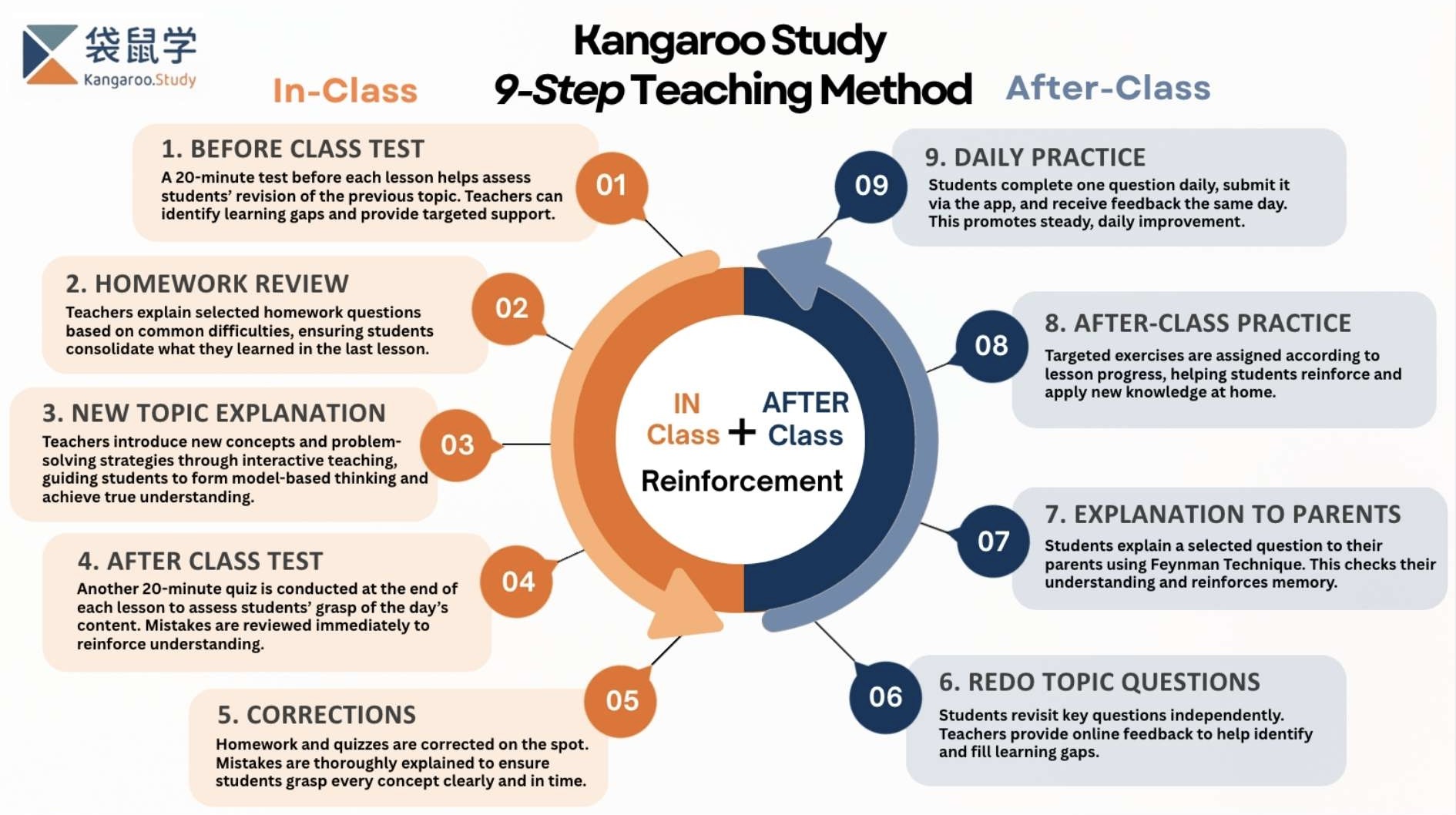
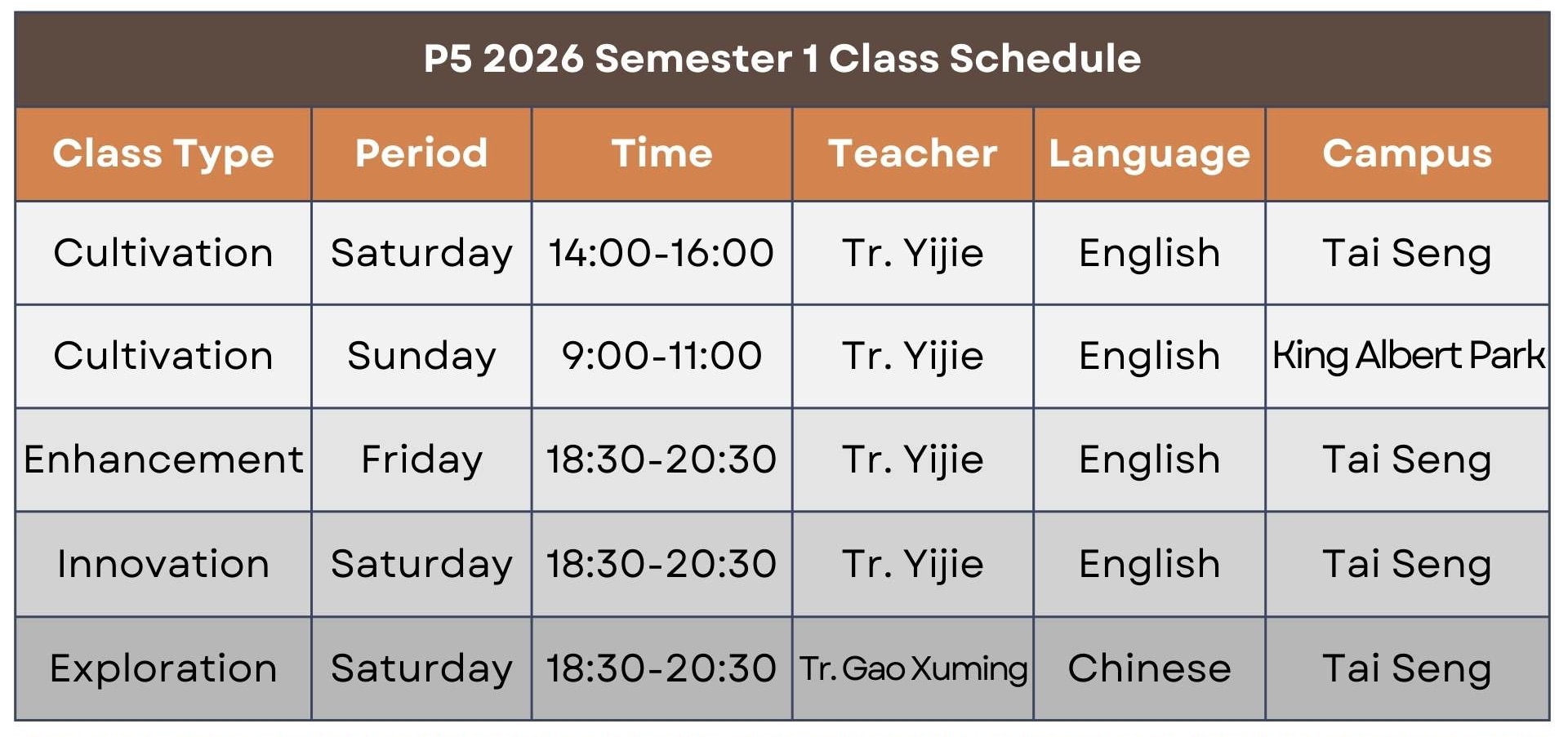
4. Teaching Model Three Key Features Parent Observation – One parent may sit in during class to observe without disrupting lessons. Refund Anytime – Tuition is refundable on a pro-rated basis. Dual-Teacher Classroom – One main teacher delivers lessons while an assistant provides real-time student feedback. Teaching Principles Guidance over Spoon-Feeding – We never directly give solutions or force memorization. No Leaving Without Understanding – Students must correct all errors from pre-tests, homework, class examples, and post-tests before leaving. Cultivating Achievement – We encourage rather than criticize, fostering confidence and motivation. Nine-Step Teaching Cycle From example explanation to post-class review, ensuring mastery and strong study habits. 5. Course Schedule (1)2026 Semester 1 Class Time:Starting from 9th January 2026 (Once weekly) (2)Class Mode:Offline Class
(3)Class Location:Tai Seng: #02-12, Grantral Mall, 601 MacPherson Road, 368242; King Albert Park:Singapore 589472,#02-09&02-21 (4)Class Size:Max16 students
(5)Fees:S$120 per lesson, 18 lessons in Semester 1,S$120 × 16 = S$2160
6. Enrollment Notes Students must first take a diagnostic test to determine the appropriate class level. For booking and inquiries, contact Teacher Gao via WeChat/WhatsApp. Through diagnostic testing, we will analyze each child's current learning status and provide tailored study recommendations. Children will also attend teacher-led test review sessions to experience our actual classroom teaching. For more details about our courses, please contact Teacher Gao at any time.
| 


 发表于 2026-1-8 09:25:36